


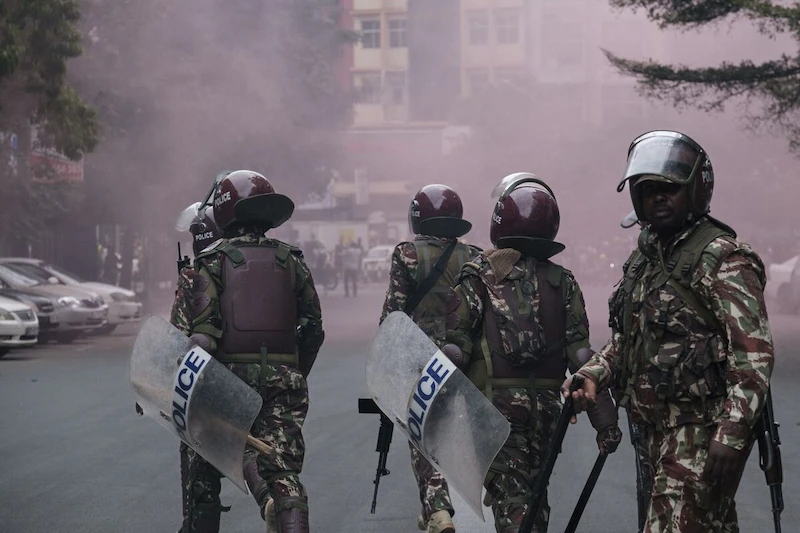


In response to warnings of potential security threats, Kenya's police have announced a ban on anti-government protests in the capital city of Nairobi. Acting Police Inspector-General Douglas Kanja highlighted concerns about organized criminal groups planning to exploit the marches for attacks and looting. The absence of clear leadership within the protest movement further complicates efforts to ensure safety measures are followed.
The decision to prohibit demonstrations in the central business district and surrounding areas comes as political activists in Kenya have been advocating for protests to be held every Tuesday and Thursday. The ongoing unrest initially stemmed from demands to halt proposed tax increases and address rampant state corruption. Despite President William Ruto's actions to retract the tax plans and overhaul his cabinet, the protests have persisted with calls for Ruto to resign.
Government spokesperson Isaac Mwaura has hinted at forthcoming talks between the ruling coalition, political parties, and various stakeholders to address the situation. Mwaura stressed the need for dialogue to prevent further disruptions that could impact revenue collection, especially as the country already faces significant financial challenges from past expenditures.
Tragically, the protests have resulted in over 50 fatalities and hundreds of injuries, underscoring the urgency for a peaceful resolution. While Ruto has expressed willingness to engage in discussions with opposition groups and civil society, concrete negotiations have yet to materialize. The main opposition Azimio-OKA group has rejected the idea of forming a coalition with Ruto's faction, signaling potential obstacles in finding a consensus to end the unrest.