


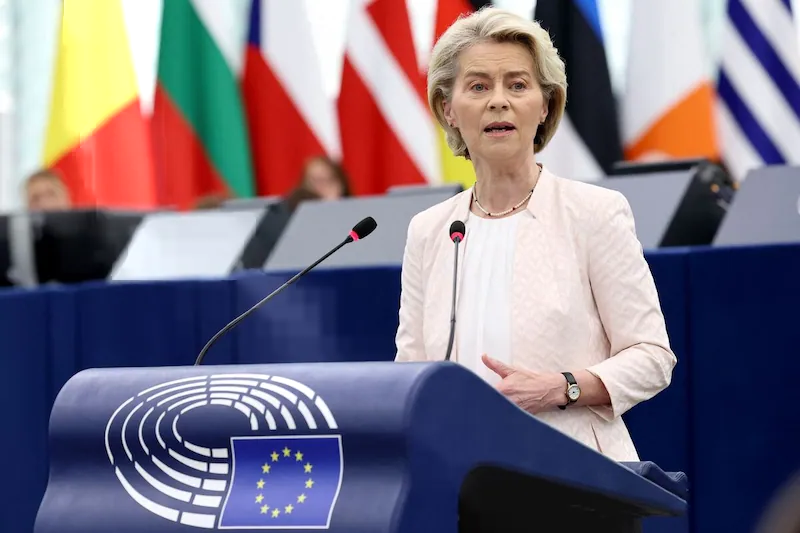


In a significant move for stability in the European Union, Ursula von der Leyen has been granted a second five-year term as president of the European Commission following a successful vote by the European Parliament. With 401 votes in favor, surpassing the required threshold of 360, von der Leyen's reappointment signals a vote of confidence during a time of political turmoil across Europe.
Securing the support of Green lawmakers, who had opposed her initial term, von der Leyen also faced opposition from Italian Prime Minister Giorgia Meloni's right-wing party, with 24 members voting against her. In her post-vote remarks, von der Leyen emphasized the challenges the EU has overcome and outlined her commitment to continue strengthening the European Union.
Known for her staunch support of Ukraine and leadership in the EU's Green Deal, von der Leyen's position as one of Europe's most influential figures is solidified with this reappointment, especially amidst the internal challenges faced by leaders like France's Emmanuel Macron and Germany's Olaf Scholz.
For the next five years, von der Leyen will lead the EU through contentious debates on climate goals, potential trade conflicts with China, and the complex geopolitical landscape influenced by the actions of key global players like the United States and Russia. She has pledged to prioritize the EU's climate ambitions, enhance competitiveness, and bolster defense industries, including the launch of a "Clean Industrial Deal" within her first 100 days in office.
Despite the challenges ahead, von der Leyen remains resolute in her mission to propel Europe towards a sustainable future, emphasizing the need for the EU to adapt to global trends, prevent market concentration, and maintain its competitive edge. With the composition of her new team of commissioners underway, von der Leyen aims to ensure diverse representation and gender balance among nominees from each member state.
As she embarks on her second term, von der Leyen will address evolving challenges such as the rise of far-right parties in the European Parliament, political instability in key EU economies, and the actions of leaders like Hungarian Prime Minister Viktor Orban. By navigating these turbulent waters and steering the EU towards a stronger, more united future, von der Leyen's leadership will continue to influence and shape the course of European politics and policies in the years ahead.