


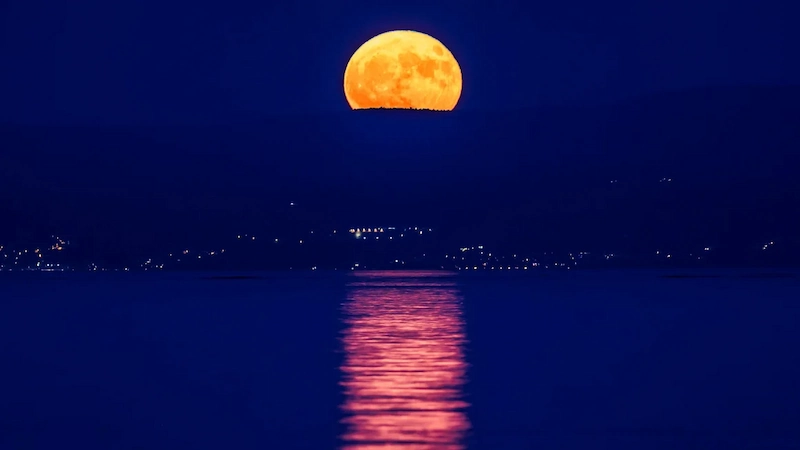


As this weekend's full moon, known as the buck moon, graces the night sky, it coincides with a significant lunar event - the 55th anniversary of the Apollo 11 lunar landing. On Sunday at 6:17 a.m. ET, the buck moon will peak, named after the full growth of male deer antlers during this time of year.
To commemorate the historic Apollo 11 mission that brought humans to the moon, NASA's Noah Petro suggests moon gazing on Saturday night. This lunar event, marking the first moon landing on July 20, 1969, led by Neil Armstrong, Buzz Aldrin, and Michael Collins, is a perfect opportunity to toast to their achievement and those who made it possible.
For optimal viewing of the full moon, Petro advises finding a spot away from obstructing buildings and trees. Even in urban areas with light pollution, the moon's brilliance can still be appreciated. While no equipment is necessary, binoculars or a telescope can enhance the viewing experience, revealing the moon's ancient volcanic features.
Each full moon presents a unique perspective due to libration and its changing distance from Earth in orbit. By capturing photos of successive full moons, observers can track these subtle variations. Apart from the buck moon, planets like Saturn, Mars, Jupiter, and Uranus can be spotted in the early morning sky this July.
NASA's Artemis program aims to return astronauts to the moon, advancing lunar exploration and uncovering new discoveries about Earth's satellite. Recent findings, such as the identification of a cave on the moon using data from the Lunar Reconnaissance Orbiter, demonstrate the ongoing mysteries waiting to be unraveled.
Ultimately, observing the full moon with an awareness of these lunar revelations and upcoming missions in mind adds a layer of appreciation to the celestial event. If missed, there are more full moons to anticipate this year, each offering a unique viewing experience under the night sky's tapestry.
Remaining moons of 2024
There are five more full moons set to shine this year. Here are their peak dates:
August 19: Sturgeon moon
September 17: Harvest moon
October 17: Hunter’s moon
November 15: Beaver moon
December 15: Cold moon