


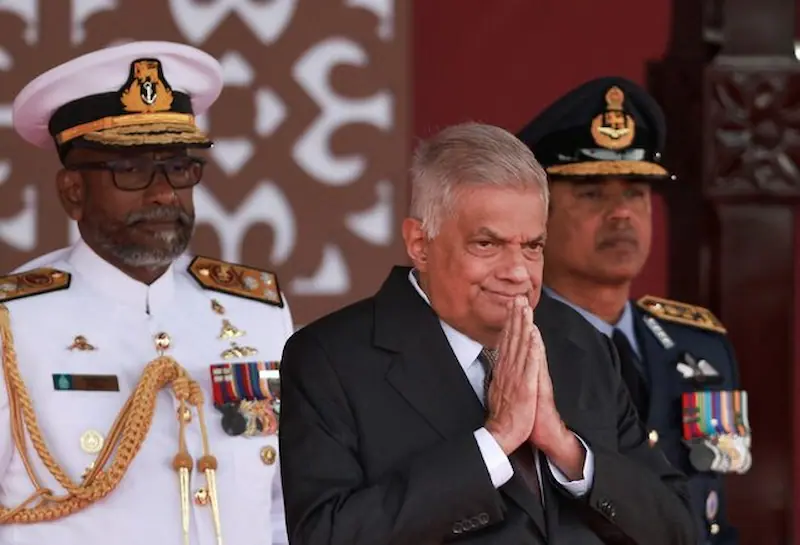


In a significant political development in Sri Lanka, President Ranil Wickremesinghe encountered a major setback on Monday as he failed to secure the support of the largest political party in parliament for his re-election campaign, raising uncertainties about his prospects in the upcoming Sept. 21 vote. The outcome of this election is pivotal for the future of reforms in the country as it grapples with its worst financial crisis in decades, impacting the lives of millions of its citizens.
With the economy in turmoil, Wickremesinghe, who assumed office in July 2022 amidst a severe financial crisis triggered by a sharp decline in foreign exchange reserves, emerged as a key figure promoting market-friendly policies and reforms. However, with only one seat in parliament, his candidacy heavily relies on the backing of the Sri Lanka Podujana Peramuna (SLPP), a party with a parliamentary majority led by former president Mahinda Rajapaksa and his brother.
Despite Wickremesinghe's efforts, the SLPP announced their decision to field their own candidate for the upcoming election, dealing a blow to his re-election bid. Nonetheless, the President remains in the race as an independent candidate, with the possibility of garnering support from a breakaway faction of the SLPP and other opposition parties.
While the SLPP's decision has created a challenging scenario for Wickremesinghe, his camp remains optimistic about potential support from SLPP dissidents and members of minority parties, enabling the formation of a broader coalition cutting across party lines and ethnic divisions.
As the political landscape in Sri Lanka remains volatile, Wickremesinghe's tenure has been marked by efforts to stabilize the economy through an IMF bailout, debt restructuring talks, and economic reforms. However, the country continues to grapple with rising poverty levels, corruption, and policy paralysis. Analysts suggest that the current crisis may have eroded the SLPP's traditional voter base, introducing an element of unpredictability in the alliance between the party and Wickremesinghe.
With the country at a crossroads, political scientist Prof. Jayadeva Uyangoda aptly notes that the upcoming election serves as a critical moment for Sri Lanka, where voters hold the power to shape the nation's future. As the nation braces for the decision day, the outcome of the election holds immense significance for the trajectory of Sri Lanka's economy and governance in the challenging times ahead.