


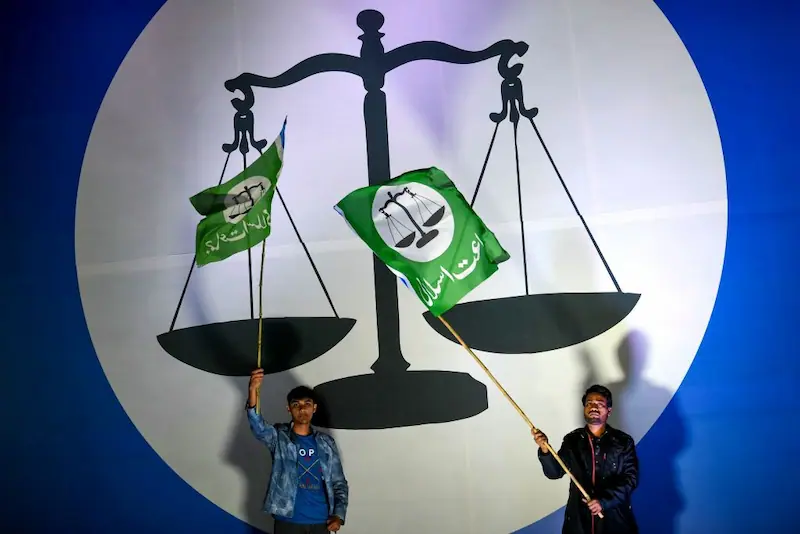


In a decisive move, the Bangladesh government has officially banned the Jamaat-e-Islami party and all associated groups from engaging in any political activities. The ban comes in the wake of recent student protests that spiraled into violence, resulting in significant destruction and loss of life.
Citing evidence of direct involvement in the chaos, the home ministry issued a notice accusing Jamaat-e-Islami and its affiliate, Islami Chhatra Shibir, of engaging in killings, sabotage, and violence during the protests. This development follows Prime Minister Sheikh Hasina's firm stance against those deemed responsible for the disorder that gripped the nation.
During a meeting on July 29, the coalition led by the ruling Awami League reached an agreement to pursue the ban, signaling a unified front in addressing the unrest. While Jamaat-e-Islami had its political party registration revoked by the High Court in 2013, rendering it ineligible to participate in elections, the recent ban seeks to further restrict the group's influence in the political realm.
Reacting to the ban, Jamaat party chief Shafiqur Rahman condemned the decision as arbitrary, illogical, and unconstitutional, asserting that neither the country's laws nor its constitution permit such a prohibition. Rahman accused the government of using the ban as a diversionary tactic to deflect attention from the legitimate grievances of the student movement and criticized the authorities for employing violence to suppress dissent.
The history of Jamaat-e-Islami in Bangladesh has been marked by controversy, with several of its leaders facing accusations related to the country's independence struggle. Over the years, the government under Hasina's leadership has executed several Jamaat leaders for their alleged roles in the 1971 war that culminated in Bangladesh's separation from Pakistan. These actions have evoked mixed reactions, with supporters lauding them as justice for past atrocities while critics decry them as politically motivated moves to silence dissent.
As Bangladesh grapples with the aftermath of the banned Jamaat-e-Islami's alleged involvement in violent protests, the government's crackdown on the Islamist party underscores the challenges of balancing security concerns with democratic principles in a complex political landscape.