


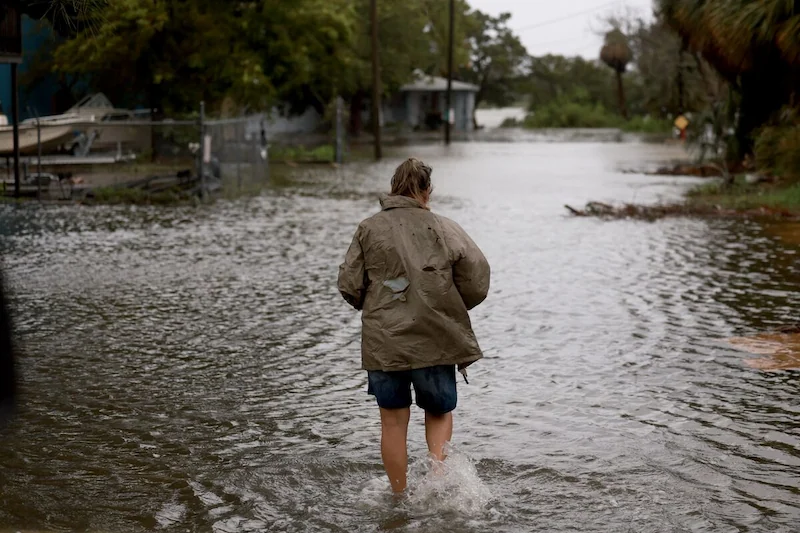


In a warming world, the impacts of severe storms and rising sea levels are becoming increasingly evident, posing a significant threat to critical infrastructure along coastlines. As highlighted in a recent report by the Union of Concerned Scientists, the number of essential facilities at risk of high-tide flooding is set to rise, potentially affecting millions of people, especially those in disadvantaged communities.
The report sheds light on the vulnerability of vital services such as schools, hospitals, power plants, and government buildings to flooding. With the increasing frequency of tidal flooding, even under optimistic scenarios, the number of exposed sites could surge drastically, leaving communities grappling with the aftermath of inundation.
Of particular concern are public and subsidized housing complexes, which make up a significant portion of assets at risk. The intersection of climate change impacts with existing societal crises, such as affordable housing shortages, further exacerbates the challenges faced by marginalized communities. Displacement and struggles for affordable housing in the wake of flooding illustrate the inequities embedded in the climate crisis.
Cities like Norfolk, Virginia, and Atlantic City, New Jersey, exemplify the pressing issues at hand, where historically disadvantaged neighborhoods are disproportionately affected by flooding threats. The need for proactive measures, equitable adaptation strategies, and investments in resilient infrastructure is paramount to address these growing challenges.
The report calls for prioritizing the protection of infrastructure in marginalized communities, alongside the development of climate-resilient affordable housing solutions. Long-term planning, including discussions around managed retreats to minimize displacement, is essential for shaping a more sustainable future for at-risk communities.
As local governments grapple with the complexities of climate adaptation, the decisions made today will have far-reaching implications for the resilience and well-being of communities for decades to come. The urgency to act decisively and inclusively in safeguarding critical services from the impacts of flooding is a critical imperative in the face of a changing climate landscape.