


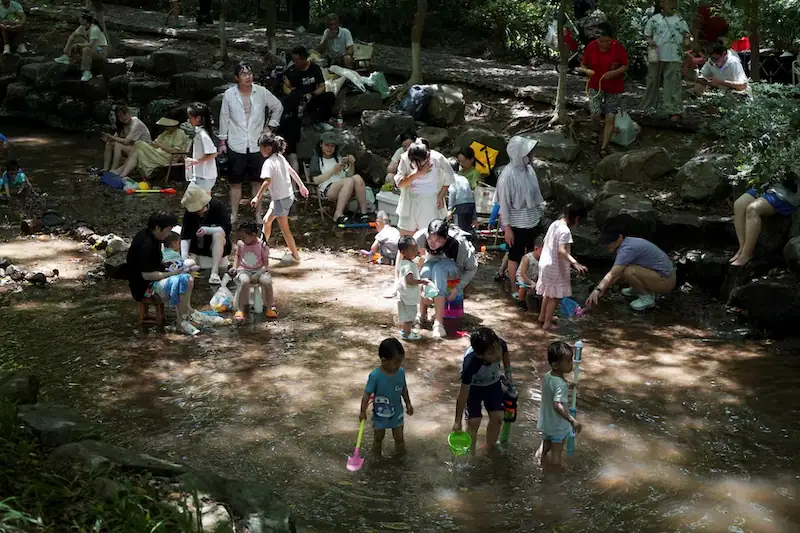


A scorching heatwave has descended upon the eastern Chinese seaboard, leading to soaring electricity demands in megacities and fears of rice crop damage in inland regions. Hangzhou, a bustling metropolis known for its corporate giants like Alibaba and NetEase, has taken drastic measures to conserve energy, including a ban on non-essential outdoor lighting. With temperatures exceeding 40 degrees Celsius, the city's power grids are being put to the test as residents seek relief from the relentless heat.
In Shanghai, a record-breaking demand for electricity has been recorded, surpassing 40 million kilowatts as the city grapples with an unprecedented heatwave. The high power load has raised concerns about grid stability and energy consumption in densely populated urban areas. Despite efforts to ensure essential lighting remains operational, authorities are facing challenges in meeting the escalating power needs of the overheated city.
The extreme temperatures in 2024 have been attributed to global warming, exacerbating conditions in regions already grappling with the impacts of the La Nina weather phenomenon. As parts of Hubei, Hunan, Jiangxi, Anhui, and Zhejiang brace for temperatures exceeding 40 degrees Celsius, the agricultural sector is on high alert. Farmers harvesting the early-season rice crop are urged to increase irrigation to prevent heat-related damage to the fields.
While neighboring countries like South Korea and Japan have reported casualties due to the intense heatwave, China remains on high alert for any potential health risks. As the sweltering conditions persist, the nation faces a critical juncture in managing the impacts of climate change on both its urban infrastructure and agricultural sector.