


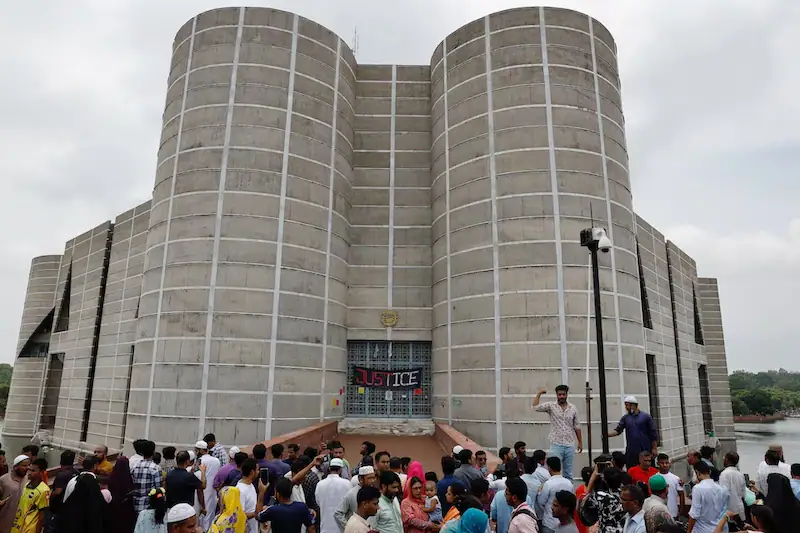


In a dramatic turn of events, President Mohammed Shahabuddin of Bangladesh took the decision to dissolve parliament on Tuesday, paving the way for an interim government and new elections. This bold move came in the aftermath of the resignation and flight of Prime Minister Sheikh Hasina, who left following a violent crackdown on a student-led uprising that had gripped the nation.
The release of opposition leader Begum Khaleda Zia from house arrest added another layer of intrigue to the unfolding political saga. The student-led protests demanding the dissolution of the parliament had gathered momentum, with the threat of more demonstrations looming if their demands were not met.
The uprising that led to Hasina's downfall originated from protests against public sector job quotas favoring families of veterans of the country's independence war. The ensuing violence resulted in the loss of hundreds of lives and left thousands injured, shaking the core of the nation.
The streets of the capital, Dhaka, which had witnessed chaos and unrest, now appeared calm on Tuesday. The closure of schools, businesses, and even garment factories due to the turmoil highlighted the widespread impact of the recent events on the economy and daily life.
As negotiations for the formation of the interim government continued, anticipation and uncertainty hung in the air. The prospect of new leadership and upcoming elections promised a potential shift in the country's political landscape.
The resignation of Hasina, a figure who had dominated Bangladesh's political scene for years, signified a significant moment in the country's history. The jubilation among the protesters and their call for a government guided by Nobel laureate Muhammad Yunus reflected a desire for change and a new direction.
The events of the past days were described as a "second liberation day" for Bangladesh by Yunus, symbolizing a fresh start after the struggles and challenges faced by the nation. Yet, reports of attacks on minority groups and temples raised concerns about the fragile social fabric and the need for unity and peace in the country.
As Bangladesh navigates this period of transition and uncertainty, the eyes of the world are on the nation, awaiting the next chapter in its political journey.