


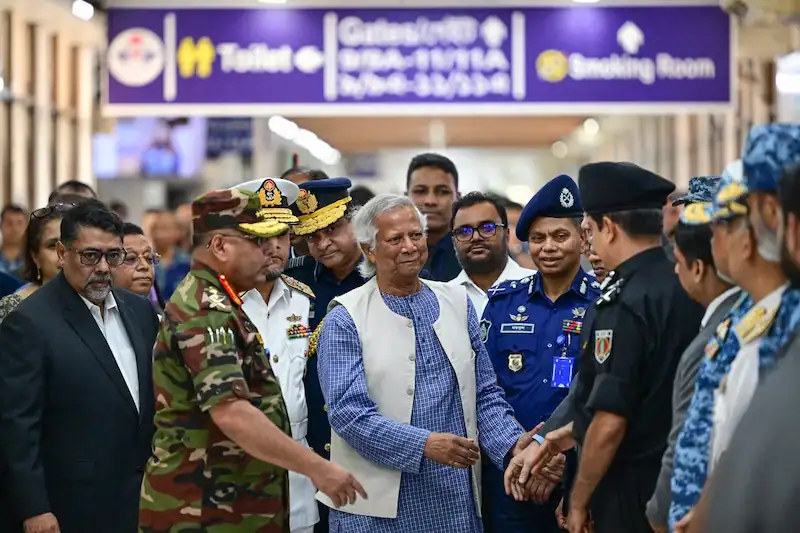


In a dramatic turn of events, Nobel Prize-winning economist Muhammad Yunus has been sworn in as the chief adviser of Bangladesh's interim government, following the ousting of Prime Minister Sheikh Hasina amidst widespread student-led protests. Yunus, a highly respected figure in the nation, emerged as a unifying force as he landed in Dhaka and took on the crucial role equivalent to that of a prime minister.
The appointment of Salehuddin Ahmed, a former Bangladesh Bank governor, and 12 other advisers, including prominent protest leaders, underscored a commitment to justice and accountability for the recent tragic deaths during the police crackdown on demonstrators. As Yunus addressed the media, his voice trembled with emotion as he acknowledged the sacrifice of a courageous young protester who stood against the authorities.
With the nation eagerly awaiting the next steps, questions loom about the electoral timeline Yunus will propose and the restoration of stability and economic growth. The opposition is urging for swift elections within the next 90 days, while stakeholders like China and the International Monetary Fund closely monitor developments to offer crucial financial support to help bolster the country's reserves and economic recovery.
Despite the recent turmoil, signs of optimism have emerged in the financial markets, with the Dhaka stock index surging and the local currency holding steady against the dollar. However, rating agencies caution that the political crisis could further impact growth, fiscal performance, and foreign exchange reserves, highlighting the urgency of a smooth transition to a democratically elected government.
Amidst the jubilation over the change in leadership, reports of violence and revenge attacks have surfaced, signaling the deep-seated animosity and tensions that have gripped the nation. The need to restore law and order and prevent further communal violence has become a top priority for the new administration, led by Yunus.
As the country navigates this critical juncture, the focus remains on ensuring stability, justice, and inclusivity in the transition towards a more democratic and prosperous Bangladesh. The challenges ahead are immense, but with Yunus at the helm, there is hope for a new chapter of unity, progress, and reconciliation.