


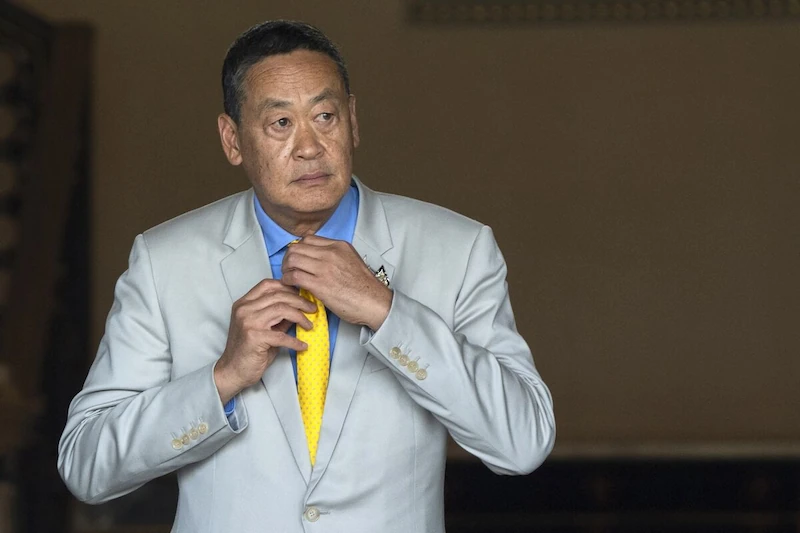


In a dramatic turn of events, the removal of Thailand's prime minister less than a year into office underscores the enduring dominance of the royalist establishment in the country's political landscape. Srettha Thavisin's ouster by the Constitutional Court marks the fourth time in two decades that a leader aligned with former Prime Minister Thaksin Shinawatra has been removed from power.
What sets this episode apart is the unlikely alliance formed between Thaksin and his erstwhile conservative rivals. Following a deal struck last year, Thaksin's party, Pheu Thai, finds itself in alignment with the very forces that have historically orchestrated military-backed rule in Thailand. This unexpected partnership, forged in the aftermath of an election that ended nearly a decade of military rule, now faces a critical test as Thai lawmakers convene to select a new prime minister.
The delicate balance within this coalition hinges on multiple factors. Thaksin's return to Thailand after years in exile, coupled with looming legal challenges, incentivizes his continued collaboration with the pro-royalist conservatives. The emergence of the People's Party, a formidable opposition group advocating for reforms that challenge entrenched interests, adds further complexity to the political landscape.
However, behind the scenes, powerful institutions such as the Constitutional Court continue to wield significant influence, curtailing the authority of elected officials and obstructing the path to true democracy in Thailand. Economic repercussions loom large, with stagnating growth and wavering investor confidence exacerbated by ongoing political uncertainty.
As Thailand navigates this period of flux, the question of who will assume the mantle of leadership remains unclear. Amidst a backdrop of intrigue and maneuvering, the nation teeters on the precipice of a new chapter in its political saga, one that will determine the future trajectory of its governance and prosperity.