


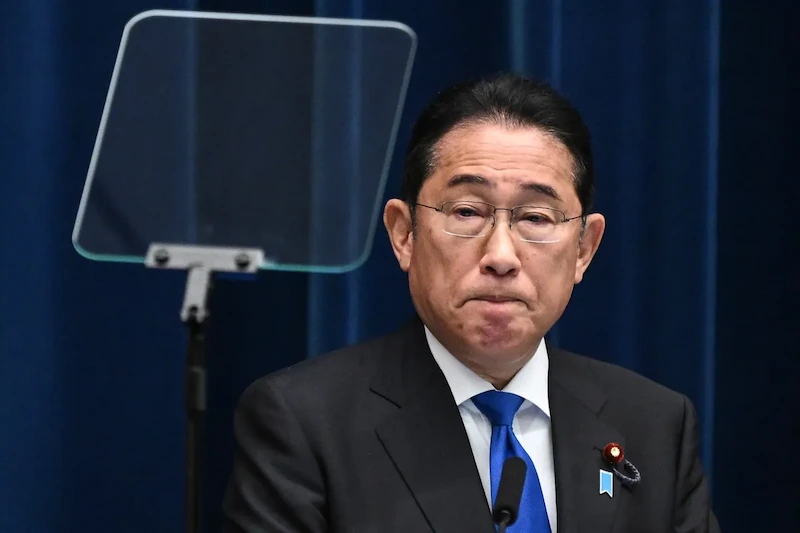


In a televised announcement on Wednesday, Japanese Prime Minister Fumio Kishida declared his decision not to seek re-election as leader of the long-standing Liberal Democratic Party (LDP) in September. This declaration sets the stage for a competitive race to determine his successor as the country's premier.
During his press conference, Kishida expressed his intention to wholeheartedly support the upcoming leadership election and the subsequent elected leader, portraying himself as a willing and dedicated supporter of the new party leader. With the LDP's dominant presence in the parliament, the winner at the party's leadership contest is likely to emerge as Japan's next prime minister. Kishida's successor will follow in the footsteps of Shinzo Abe, the nation's longest-serving leader, who stepped down in 2020.
Following Kishida's announcement, the yen saw a slight upsurge against the dollar, while Japanese stock indexes displayed a mix of movements. This shift in leadership comes amid Kishida's declining popularity, attributed to public discontent surrounding a scandal involving party factions concealing earnings from fundraising activities and challenges related to inflation and currency depreciation.
Kishida's administration and the central bank have made concerted efforts to present a united front and stabilize financial markets, particularly following a recent substantial stock market downturn that prompted scrutiny of monetary policies. The upcoming transition in leadership is seen as an opportunity for the LDP to infuse a sense of renewal and change into its leadership structure.
As the political landscape evolves, speculation mounts regarding potential candidates to succeed Kishida. While former Defense Minister Shigeru Ishiba emerges as a favored choice in media surveys, other prominent figures such as Digital Transformation Minister Taro Kono, Foreign Minister Yoko Kamikawa, and Shinjiro Koizumi, son of a former prime minister, also feature prominently in discussions.
Despite the upcoming leadership transition, the LDP and its coalition partner Komeito are anticipated to maintain a firm grip on power, ensuring stability in the broader political arena. While no immediate general elections are required until 2025, the new prime minister might opt to seek a fresh electoral mandate to solidify support for the government's policies.
With uncertainty surrounding the future leadership of Japan, financial markets could experience volatility as investors navigate the shifting political landscape. The outcome of the upcoming leadership race will not only impact the direction of Japan's governance but also have repercussions on economic policies and market dynamics.