


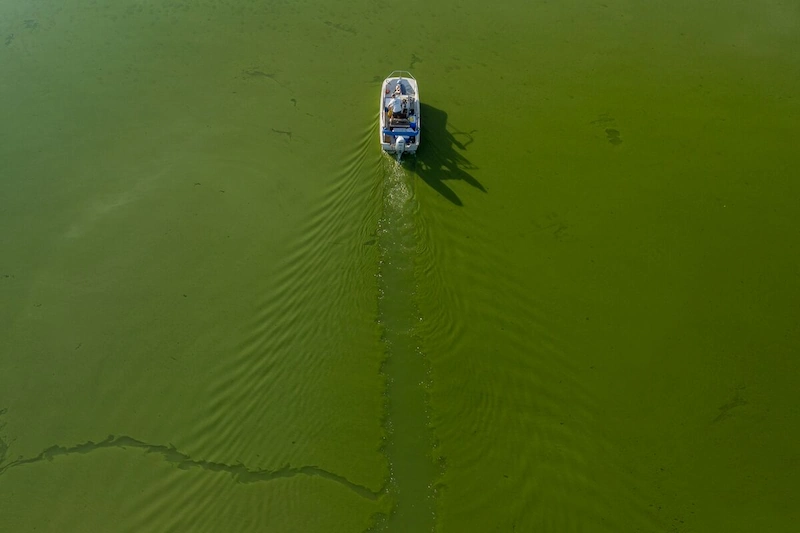


As temperatures continue to climb due to climate change, the threat of harmful bacterial blooms in lakes and rivers across the US is on the rise. Warm waters provide the perfect breeding ground for E. coli and cyanobacteria, leading to widespread beach closures and health concerns for swimmers. Not only do these bacterial outbreaks pose risks to human health, but they also come with a hefty price tag. Between 2010 and 2020, the US spent over $1 billion on preventing and treating harmful cyanobacterial blooms, a figure that is only expected to increase as global warming continues.
The combination of warmer waters and heavier downpours creates ideal conditions for bacterial growth, with stormwater washing nutrients like phosphorus and nitrogen into water bodies, further exacerbating the issue. As temperatures rise, the incidence of harmful bacteria like E. coli also increases, compounding the risks to public health.
States like Massachusetts and Vermont, traditionally not associated with bacterial blooms, are experiencing record numbers of beach closures due to spikes in bacteria levels. Even iconic destinations like Lake Tahoe are not immune, with concerns of toxic algal blooms emerging in recent years. The impact of these blooms extends beyond health concerns, threatening the vital tourism revenue that many lakeside communities depend on.
In response to these challenges, some communities have turned to innovative solutions like nanobubble technology to combat bacterial blooms. However, the scalability and cost of these solutions remain significant hurdles, particularly for large bodies of water like Lake Elsinore. Ultimately, reducing nitrogen and phosphorus pollution and lowering emissions are crucial steps in mitigating the risks of harmful bacterial blooms and safeguarding the economies of tourism-reliant communities.
As communities grapple with these challenges, the delicate balance between environmental preservation and economic sustainability becomes increasingly apparent. The beauty and health of our lakes are not only a source of enjoyment but also a cornerstone of local economies. Finding effective solutions to protect these precious resources is essential for the well-being of both people and businesses that rely on them.