


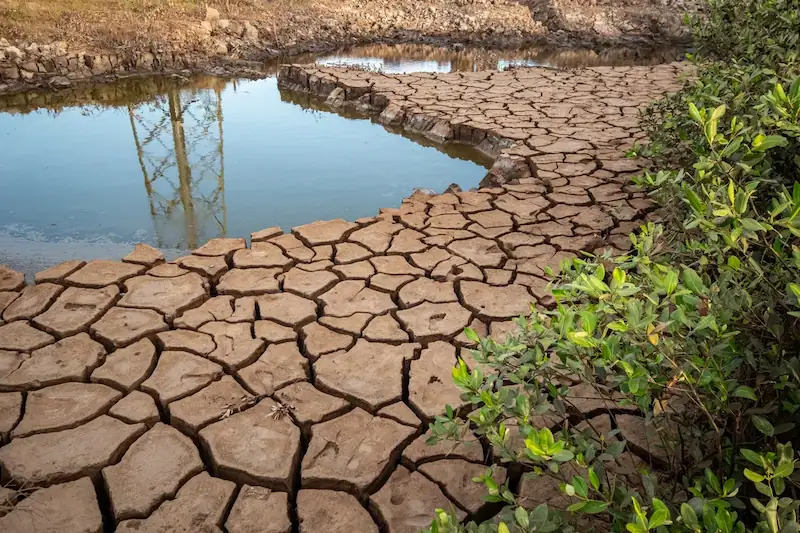


In the scorching summer of 2024, Las Vegas shattered its long-standing heat record, reaching a blistering 120 degrees Fahrenheit on July 7. This unprecedented event marked a stark shift in global climate patterns, following a 13-month streak of record-breaking monthly temperatures. Scientists have observed a trend of extreme heat waves breaking local records by significant margins, leading to heightened concerns about the escalating impact of climate change.
Erich Fischer, a pioneering climate scientist at ETH Zurich, has been at the forefront of this research. His groundbreaking analysis revealed a disturbing projection: in the absence of substantial action to curb greenhouse gas emissions, the world could witness "record-shattering extremes," nearly unimaginable in the pre-warming era. Fischer's findings were swiftly validated by real-world events, such as the devastating heatwave in western North America that stunned the world with its ferocity.
As temperatures soar to unprecedented levels, Fischer predicts that once-rare high-end heat events will become increasingly commonplace. A 1-in-1,000-year heat wave from the past may now recur as often as once every 40 years, highlighting the accelerated pace of climate change impacts. The emerging reality of these extreme leaps can be likened to a supercharged athlete suddenly outperforming all previous records.
However, pinpointing the exact boundaries of these new heat records is a complex challenge. Various factors, including the duration of heat events and the geographical scale of measurements, contribute to the vast array of data interpretations. While some regions, like the UK, have witnessed notable temperature spikes, comprehensive data collection remains essential for conclusive observations on climate change-induced heat extremes.
Recent anomalies, such as Africa's record-breaking temperature in Aswan and Costa Rica's unprecedented heatwave, underscore the global magnitude of these heat jumps. Researchers anticipate that future data will validate a definitive shift in temperature margins, solidifying the link between climate change and extreme heat events. As the world grapples with the reality of escalating temperatures, experts like Mingfang Ting from Columbia University believe that while the signs are becoming clearer, a longer data record is essential to conclusively prove this transformative phenomenon.
In conclusion, the world stands at a critical juncture, where the rapid acceleration of heat records signals a pressing need for urgent climate action. The unprecedented heat events of today may become the norm of tomorrow, underscoring the urgency of safeguarding our planet for future generations.