


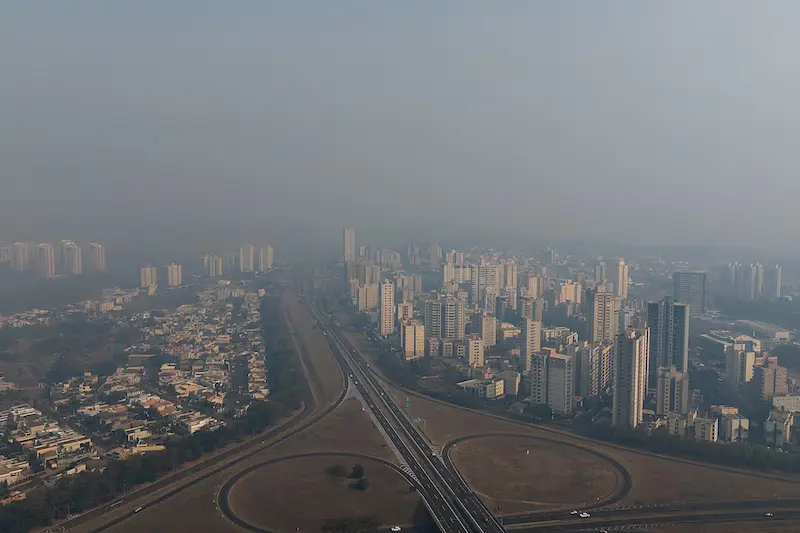


In an alarming turn of events, Sao Paulo state in Brazil is currently facing a dire situation as wildfires have broken out in 30 cities, with devastating consequences. The dry and hot weather conditions have created a perfect storm for these fires to spread rapidly, putting both lives and natural vegetation at risk.
The state government issued a statement warning of the potential for the fires to escalate further due to gusts of wind, which could result in widespread destruction of forests and wildlife habitats. While the flames have not yet reached the city of Sao Paulo itself, reports indicate that smoke has begun to obscure parts of the sky in the state capital, raising concerns among residents.
Tragically, two individuals lost their lives in a heartbreaking incident at an industrial plant in Urupes while bravely attempting to contain the fires. The government has not provided further details on the circumstances leading to their deaths, but the loss serves as a stark reminder of the dangers posed by these wildfires.
Additionally, the world's largest sugarcane processor, Raizen, was forced to halt operations at a plant in Sertaozinho due to the fires raging in the surrounding sugarcane fields. This disruption underscores the economic impact of the wildfires, affecting businesses and livelihoods in the region.
To address the escalating crisis, the Sao Paulo state government has established an emergency committee to coordinate firefighting efforts and mitigate the damage caused by the fires. Moreover, the fires have led to the closure of several highways, further complicating transportation and access to affected areas.
As Brazil's wildfire season reaches its peak in August and September, the situation remains critical. This year has already seen an early onset of wildfires in the Pantanal wetlands and a concerning surge in fires in the Amazon rainforest. The need for immediate action to combat these blazes and protect both the environment and communities has never been more urgent.