


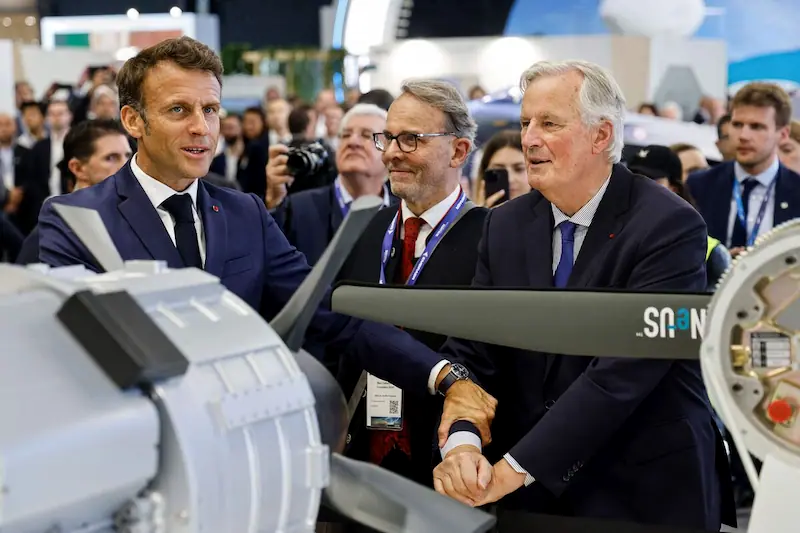


Amidst a fractured political landscape in France, the unexpected selection of 73-year-old Michel Barnier as the next prime minister has sparked both intrigue and skepticism. His lack of a strong political base may work in his favor in navigating the turbulent waters of the French parliament, where opposing factions have made governance a challenging feat for President Emmanuel Macron.
Barnier, a seasoned center-right politician with a long history in French politics, presents a potential solution to the ongoing institutional crisis that has gripped the nation following recent parliamentary elections. While not viewed as a serious threat by the likes of nationalist Marine Le Pen, his appointment signifies Macron's willingness to explore unorthodox avenues to restore stability.
As Macron's once-promising political project appears to be unraveling, Barnier's selection illustrates the lengths to which the president is willing to go to maintain a semblance of control. Despite being a key figure in European politics as the EU's former chief Brexit negotiator, Barnier remains relatively unknown to the wider French populace, a factor that could work both for and against his tenure as prime minister.
The delicate balance Barnier must strike between garnering support from right-wing parties while also appeasing the demands of the left adds a layer of complexity to his leadership. While the National Rally's conditional acceptance of his appointment offers a temporary reprieve, potential clashes loom on the horizon, with past criticisms from the far-right party highlighting the fragility of the alliance.
Barnier's evolution from a pro-European stance to a more nationalist outlook underscores the shifting dynamics within French politics. His prior experience in Brexit negotiations and recent advocacy for greater French sovereignty signal a departure from Macron's policies, potentially setting the stage for a new chapter in French governance.
In a political landscape fraught with uncertainty and discontent, Barnier's appointment as prime minister represents a calculated gamble by Macron, one that could either pave the way for stability or invite further discord. As the nation watches with bated breath, the success or failure of this unconventional choice will undoubtedly shape the trajectory of French politics in the years to come.