




In a crucial election held on Saturday, Sri Lankans turned out to elect their next president, tasked with steering the country's fragile economic recovery after facing its worst financial crisis in decades. President Ranil Wickremesinghe, opposition leader Sajith Premadasa, and challenger Anura Kumara Dissanayake emerged as the front-runners in a closely contested race that could potentially lead to a second round of counting due to the nature of the competition.
As polls closed at 4 p.m., the counting process began immediately with results expected to be announced the following day by the Election Commission. Notably, the election system in Sri Lanka allows voters to cast three preferential votes for their preferred candidates, adding an element of complexity to the tallying process.
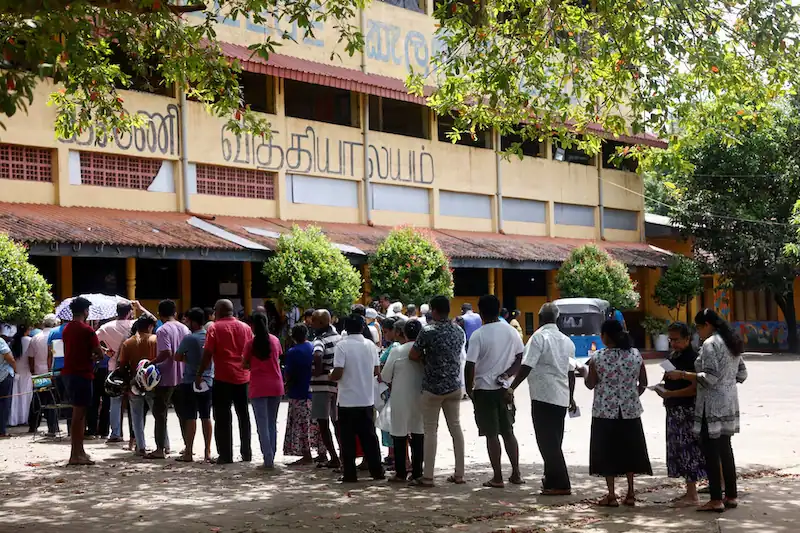
Despite the challenges, the voting process proceeded peacefully across the island nation, with citizens queuing patiently at polling stations throughout the day. More than 17 million eligible voters out of the country's 22 million population participated in the election, choosing from a pool of 38 candidates.
The significance of this election stems from Sri Lanka's recent economic turmoil, which peaked in 2022, leading to widespread protests and political upheaval. The subsequent IMF bailout has laid the groundwork for a tentative recovery, yet the high cost of living remains a pressing issue for many Sri Lankans.
At Visakha Vidyalaya, a polling station near Colombo, voters expressed the urgent need for change and a better future for the country. The next president is expected to steer Sri Lanka through the IMF program until 2027, reassuring markets, attracting investors, and uplifting millions still struggling with poverty and debt.
As voters cast their ballots, candidates like Anura Kumara Dissanayake emphasized the pivotal nature of this election in shaping the country's future. Meanwhile, President Ranil Wickremesinghe highlighted the progress made in stabilizing the government and democratic system under his leadership.
Ultimately, the outcome of this election will determine Sri Lanka's trajectory in the coming years, with the elected president entrusted to navigate the country towards economic stability, growth, and prosperity.