


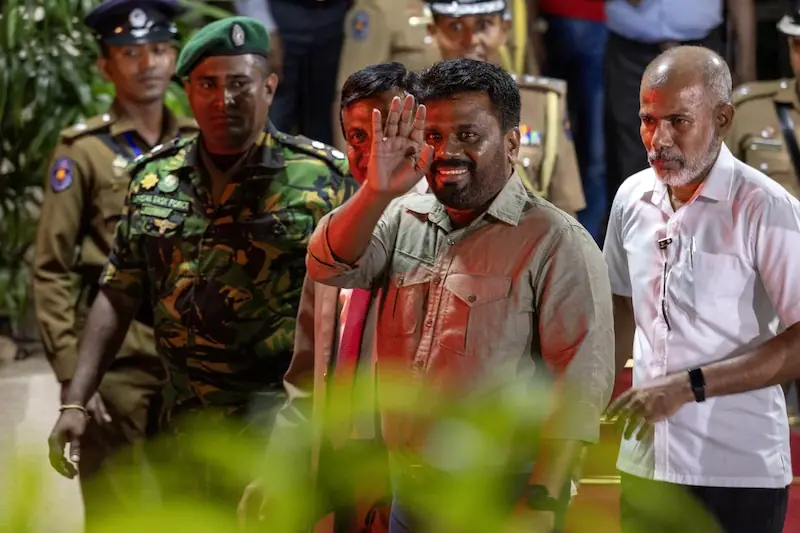


In a historic moment for Sri Lanka, leftist candidate Anura Kumara Dissanayake emerged victorious in a tightly contested presidential election, capturing 5.74 million votes in the country's first-ever runoff. Defeating opposition leader Sajith Premadasa, Dissanayake's win symbolizes a significant shift in leadership, marking the end of the incumbent President Ranil Wickremesinghe's tenure.
Dissanayake's platform, centered on clean governance and anti-corruption efforts, resonated with a populace grappling with the aftermath of a severe economic crisis. Pledging to address the country's high debt and fragile economy, Dissanayake emphasized the need for unity and constructive dialogues to propel Sri Lanka towards a brighter future.
The new president's victory grants his National People’s Power coalition a mandate to implement a series of economic reforms, including renegotiating the nation's $3 billion IMF bailout agreement. The unpopular austerity measures imposed by the previous administration have left citizens disillusioned, making Dissanayake's promises of reform particularly compelling.
However, concerns loom regarding the potential impact of altering the IMF deal on the economy. Investors are wary of any deviations from the current agreement, which could stall the flow of vital funds and exacerbate the country's economic challenges. Dissanayake's team has indicated a willingness to engage with the IMF while seeking modifications to the existing terms.
Notably, Dissanayake's ascent to power underscores a growing discontent among Sri Lankans towards traditional political elites. Coming from outside the established political families, his unexpected victory signals a demand for change and a rejection of the status quo.
As the new president prepares to navigate complex foreign policy dynamics with China and India, observers speculate on his leanings given his party's Marxist origins. Balancing strategic relationships and scrutinizing investment deals will be key priorities, especially in light of past concerns regarding debt traps and trade agreements.
With a background rooted in student activism and party leadership, Dissanayake brings a fresh perspective to governance, emphasizing transparency and equitable economic policies. However, doubts linger over the feasibility of fulfilling campaign promises, particularly in the absence of a clear fiscal plan.
As Sri Lanka enters a new era under Dissanayake's leadership, the challenges of rebuilding the economy, managing foreign relations, and upholding anti-corruption efforts loom large. The path ahead is rife with uncertainties, yet the mandate for change is clear, setting the stage for a transformative chapter in the country's history.