


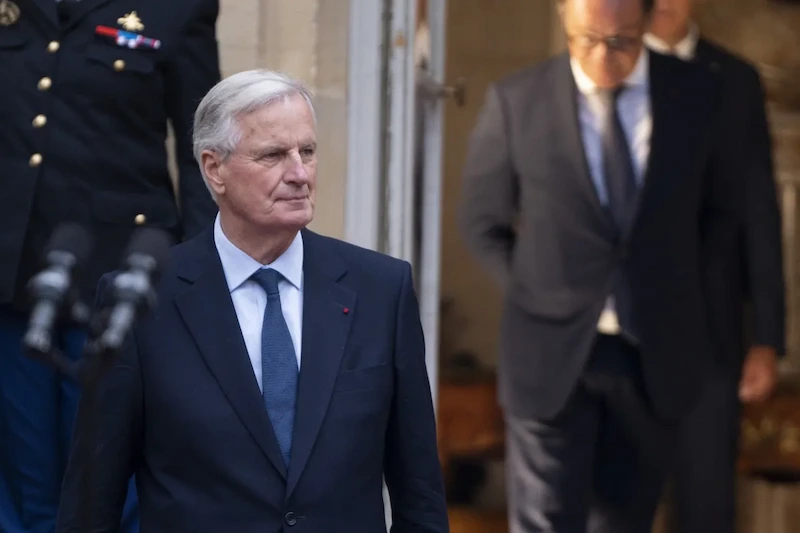


In a recent televised interview, Prime Minister Michel Barnier of France expressed openness to taxing wealthy individuals and large corporations as part of a collective effort to address the country's significant budget deficit. Barnier emphasized the need to avoid burdening the middle class and workers with additional taxes, highlighting the severity of France's debt situation as "grave."
The political landscape in France remains turbulent, with threats from both left and right parties to bring down the newly formed government. Amid these challenges, some lawmakers have insisted that any tax increases would be unacceptable, introducing a complex dynamic to the situation.
President Emmanuel Macron's push for stability through a snap election has backfired, leading to a fragmented National Assembly and a decline in investor confidence. As France struggles with escalating borrowing costs and strained public finances, Barnier faces mounting pressure to navigate a delicate balance between fiscal responsibility and political stability.
Despite the discord within his cabinet and the looming possibility of a no-confidence vote, Barnier's government must urgently address the country's mounting deficit. With the EU closely monitoring France's fiscal performance, the need for immediate action to curb spending and potentially increase taxes is becoming more urgent.
Bank of France Governor Francois Villeroy de Galhau has supported Barnier's tax proposals, emphasizing the importance of targeted and fair measures to avoid undermining economic confidence. While the specifics of the upcoming budget bill are still in flux, the government's approach to taxation and spending cuts will be crucial in determining its future.
The appointment of relatively young and inexperienced officials to key positions, such as Finance Minister Antoine Armand and Budget Minister Laurent Saint-Martin, signals Barnier's focus on driving through necessary fiscal reforms. With the pressure mounting and uncertainty lingering, the success of Barnier's government hinges on its ability to navigate the intricate web of economic challenges and political discord in France.