


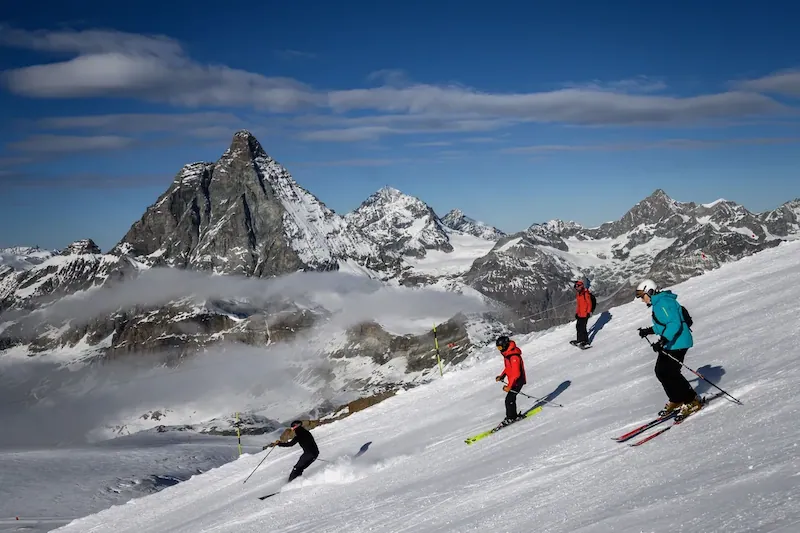


In a historic move prompted by the devastating effects of climate change in the Alps, Switzerland and Italy have come together to adjust their mountainous border near the iconic Matterhorn peak. The traditional boundary, long marked by the ridges of glaciers and perpetual snow, is rapidly shifting as the once-proud ice formations continue to melt at an alarming rate.
The European continent is experiencing unprecedented warming, with the Alps bearing the brunt of this environmental crisis. Over the past two years alone, these majestic glaciers have lost a staggering 10% of their remaining volume, a dire sign of the changing climate. Scientists predict that by 2050, these glaciers could lose half of their ice even if global temperatures are kept below a 2-degree Celsius increase from pre-industrial levels.
The repercussions of these glacial retreats extend far beyond mere border adjustments. Familiar mountain routes are being altered, posing new challenges for hikers and climbers. And in the most tragic of circumstances, entire sections of ice can suddenly give way, as was seen in July 2022 when a group of climbers lost their lives to a massive ice collapse on the Marmolada glacier in the Italian Dolomites.
The area where the border modifications are taking place is none other than the renowned Zermatt ski resort, a popular destination for outdoor enthusiasts seeking adventure amidst breathtaking alpine landscapes. The agreement between Switzerland and Italy will redefine the frontier around key landmarks such as Testa Grigia, Plateau Rosa, Rifugio Carrel, and Gobba di Rollin, taking into account the economic interests of both nations.
Switzerland has already given its approval to the border treaty, signaling a unified effort to address the challenges posed by climate change in the region. Italy is expected to follow suit, solidifying the new territorial boundaries amid the ongoing glacier melt.
As tourists continue to flock to the Zermatt resort each year, drawn by the allure of the Matterhorn and the promise of outdoor recreation, the need for sustainable practices and environmental stewardship has never been more apparent. The fate of these glaciers serves as a stark reminder of the urgent action required to mitigate the impacts of climate change and preserve the natural wonders of the Alps for future generations.