


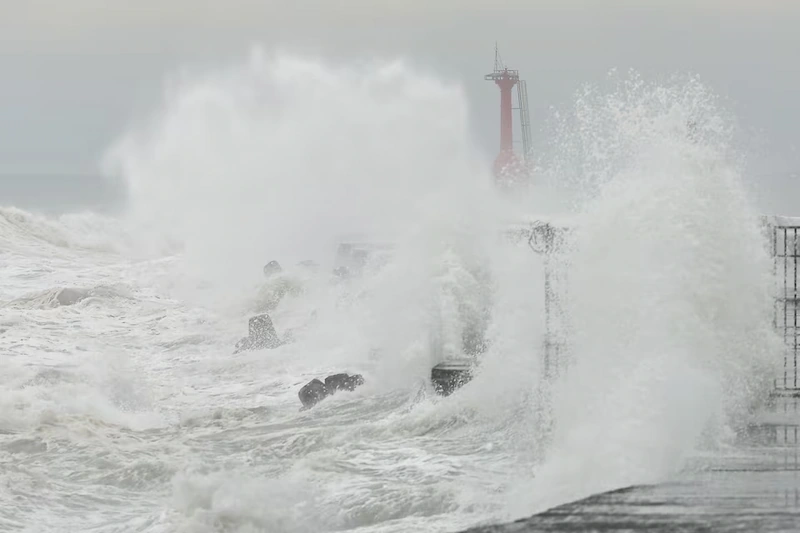


As Taiwan hunkered down in anticipation of the impact of Typhoon Krathon, the island faced the closure of schools, offices, and financial markets, with hundreds of flights grounded. The weakening typhoon threatened torrential rain and strong winds, prompting officials in Kaohsiung to issue warnings reminiscent of the devastating Typhoon Thelma of 1977.
Despite its weakening intensity, the storm still posed significant risks, including storm surges and heavy rainfall as it slowly approached the coast of Taiwan. Kaohsiung Mayor Chen Chi-mai emphasized the potential threat and urged residents to remain vigilant to avoid underestimating the storm's impact.
While forecasters predicted a downgrade of the typhoon to a tropical depression upon landfall, memories of past storms fueled caution among the population. With one reported fatality and others missing, the island mobilized evacuations and declared a day off in all cities and counties. More than 10,000 individuals were moved to safety, particularly in the southern and eastern regions.
The Taiwanese government's response included the closure of financial markets and the implementation of precautionary measures. The anticipation of the typhoon's trajectory, aiming at the western plain rather than the traditional east coast landfall, added to the uncertainty. The high-speed rail service continued with reduced schedules, while major companies like TSMC assured minimal operational disruptions.
As Taiwan braced itself for the weather onslaught, the collective memory of past catastrophes spurred preparedness efforts. The population, especially the elderly, reflected on the disastrous consequences of previous typhoons, emphasizing the importance of readiness and proactive measures in the face of natural disasters. With troops on standby and widespread distribution of sandbags, Taiwan aimed to mitigate the impact of Typhoon Krathon and safeguard its population and infrastructure.