


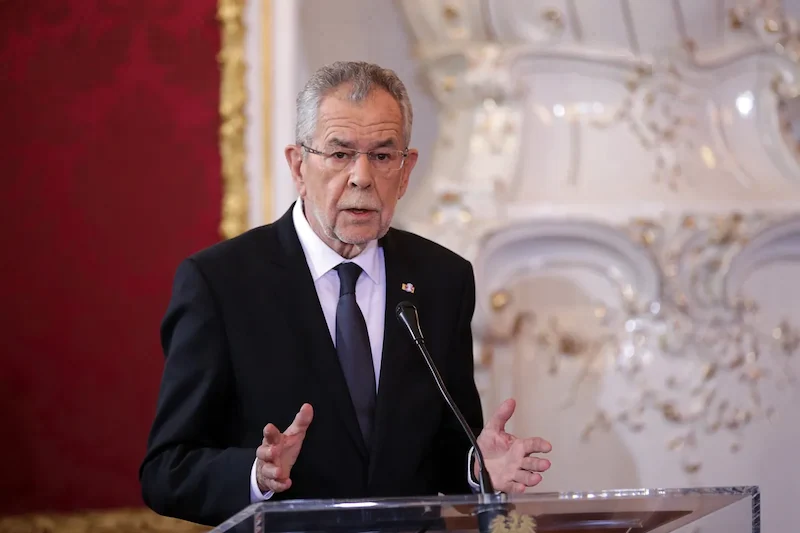


In the aftermath of Austria's recent elections, President Alexander Van der Bellen has taken the first step towards forming a new government by scheduling discussions with leaders of the largest political parties. The process begins with a meeting with Herbert Kickl, the leader of the far-right Freedom Party, which emerged as the top vote-getter in the election. President Van der Bellen will also meet with incumbent Chancellor Karl Nehammer of the conservative party and the leader of the social democrats, Andreas Babler.
The president's approach to the talks has been described as open-minded, with a focus on ensuring that any potential government formation has the necessary parliamentary majority. While all parties have expressed reluctance to include the far-right Freedom Party in a coalition, there is a growing sense of momentum towards a centrist coalition.
In Austria, coalition governments have traditionally been formed by a combination of the two main traditional parties. However, the negotiation process has historically been lengthy, often stretching into months rather than weeks. As a result, it is expected that the discussions regarding the formation of a new government could extend into the next year.
The upcoming meetings and negotiations between the various political leaders will play a crucial role in shaping the future government of Austria. As the country navigates through post-election uncertainties, the outcome of these discussions will determine the direction of Austria's political landscape in the months to come.