


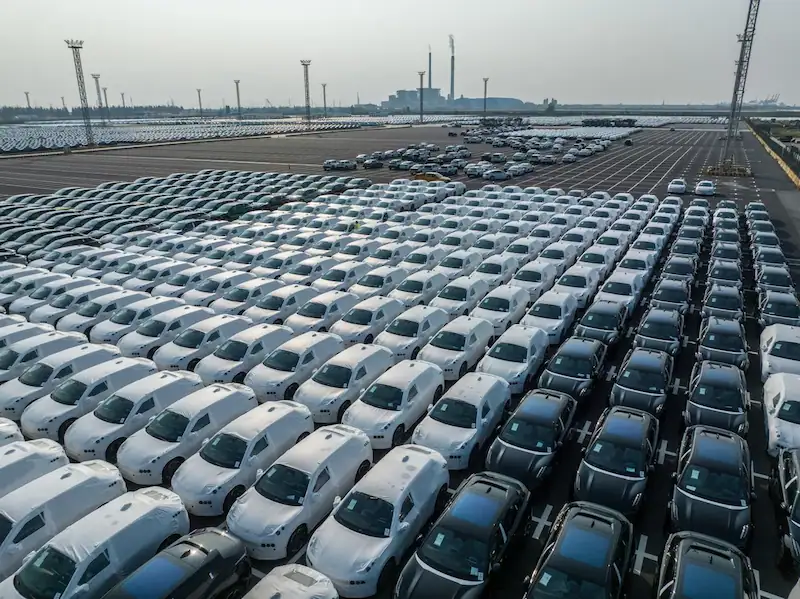


In a significant development that signals a paradigm shift in EU-China relations, the European Union has made a decisive move by imposing tariffs on electric vehicles, citing unfair subsidies provided to Chinese carmakers. The decision, which aligns with the US's tough stance on Chinese trade practices, aims to uphold World Trade Organization regulations but also raises the specter of retaliation and potential repercussions on consumers and businesses.
Amid calls from leaders like French President Emmanuel Macron for a reset of Europe's economic model to effectively compete with global giants like the US and China, the EU is set to unveil a new competitiveness roadmap. This shift comes in light of concerns raised by figures such as former ECB President Mario Draghi, who warned of the EU facing a "slow agony" if it fails to invest in economic transformation.
The sluggish growth of the EU compared to the US, driven by challenges in productivity, coupled with the strong industrial plans of China, have already begun impacting key industries like automotive. Major European carmakers such as Volkswagen, Mercedes-Benz, BMW, and Stellantis have faced setbacks, issuing profit warnings and grappling with various challenges.
The EU's decision to impose tariffs on Chinese electric vehicles is seen as a strategic move to address market distortions and competition concerns. However, in the face of global economic uncertainties, including inflation shocks, trade tensions, and the specter of trade wars, the move also poses economic risks. With the potential for increased consumer prices and renewed pressures on central banks, the EU is navigating a delicate balance between asserting its position and safeguarding its economic stability.
As the world's largest trading bloc, the EU finds itself at a critical juncture, compelled to recalibrate its approach in a rapidly evolving global landscape marked by geopolitical rivalries and quest for resources. The push for fair trade while avoiding a full-blown trade war reflects the EU's commitment to a negotiated solution, underscoring the need for unity to counter China's industrial assertiveness effectively.