


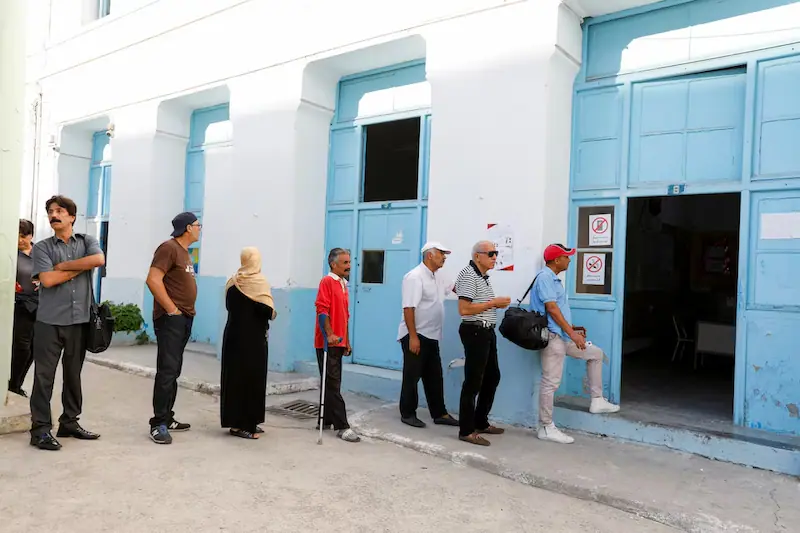


Tunisia's electoral atmosphere has been shrouded in controversy as President Kais Saied, vying for a second term, faces a diminished field of competitors following the sudden imprisonment of his main rival and the suppression of many other opponents from running. The election, held on Sunday, features Saied up against two challengers: former ally turned critic Zouhair Maghzaoui of the Chaab Party and Ayachi Zammel, a once formidable contender now incarcerated.
Once celebrated as a beacon of hope after the Arab Spring uprisings in 2011, Tunisia's democratic progress has been severely curtailed under Saied's rule since 2019. Critics argue that he has eroded democratic institutions and consolidated power unchecked. Despite these criticisms, Saied remains steadfast in his stance, equating his actions to combating a corrupt establishment and treachery, vehemently denying any aspirations of dictatorship.
The political landscape leading up to the election is rife with injustice. Opposition figures have been imprisoned on dubious charges, prominent candidates barred from participating, and the rule of law systematically dismantled. This has stirred public outrage and disenchantment within a populace grappling with economic woes and pervasive corruption.
Voter turnout, a crucial indicator of public engagement, stood at 14% by midday, reflecting a disenchanted electorate disheartened by recent events. As polls close, and results await to be unveiled in the coming days, Tunisia stands at a crossroads.
Amidst rising tensions, marked by the disqualification of prominent candidates and the neutering of judicial oversight, Tunisia navigates a turbulent electoral period. Saied's controversial actions, including the dissolution of parliament and rewriting of the constitution, have triggered cries of a democratic backslide and provoked accusations of a power grab.
While supporters cite Saied's crackdown on corruption as a reason to endorse his bid, others view his methods as authoritarian and detrimental to Tunisia's democratic fabric. With economic challenges persisting, dissent stifled, and polarisation deepening, the aftermath of this election may hold profound implications for Tunisia's future trajectory.
Despite division and turmoil, Tunisia awaits the outcome of a pivotal election, where the voices of its citizens, embattled by repression and political upheaval, seek to shape the nation's destiny.