


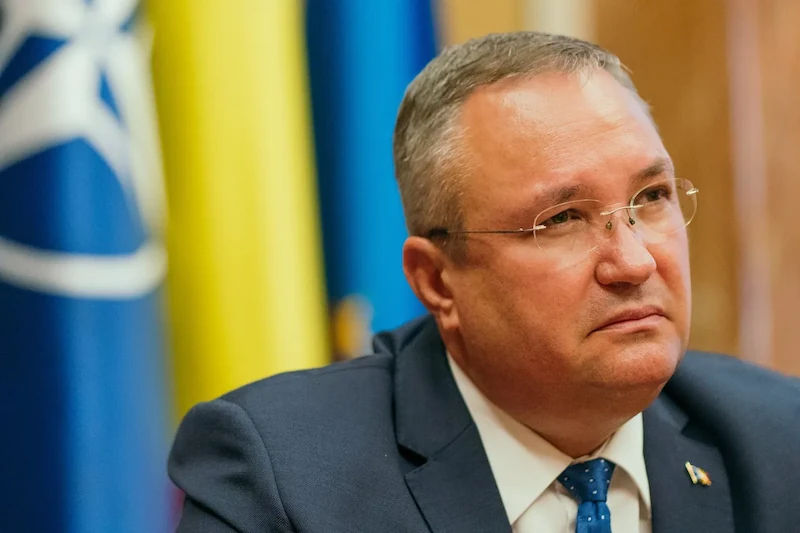


In a surprising turn of events, Romania's political landscape has been thrown into disarray as the junior partner in the governing coalition has effectively ended their alliance just weeks before crucial elections are set to reshape the country's leadership. The leader of the Liberal party, Nicolae Ciuca, expressed strong disapproval of a recent decision by the top court to remove a far-right candidate from the upcoming presidential race, accusing the move of playing into the hands of the ruling Social Democrats.
The decision by Ciuca to halt the political alliance between long-standing rivals has created uncertainty about the future stability of the coalition, which has provided a semblance of political balance for the past three years. With polls indicating that neither party is likely to secure a majority in the upcoming parliamentary election on December 1st, Romania faces the prospect of increased political fragmentation at a time when economic challenges loom large.
Ciuca's abrupt move comes amidst a presidential election where he faces stiff competition from Prime Minister Marcel Ciolacu and former NATO deputy chief Mircea Geoana. As Ciuca's prospects in the presidential race appear dim, the decision to sever ties with the Social Democrats could have ramifications for the general election, potentially undermining the Liberals' chances at the polls.
The upcoming back-to-back elections, with a potential presidential runoff on December 8th, are set to shake up Romania's political landscape, which has been characterized by a delicate alliance between the main parties since 2021. The rift in the coalition could complicate efforts to address the country's widening budget deficit, posing challenges for fiscal policy post-election.
While the Social Democrats have expressed a desire to continue the coalition with the Liberals to push forward with reforms, Ciuca's decision reflects deep-seated frustrations within the alliance. The recent controversial ruling by the Constitutional Court to disqualify the far-right candidate has further fueled political tensions, with Ciuca criticizing the court's overreach and alleged bias towards the ruling party.
As Romania navigates these tumultuous political waters, the need for robust checks and balances, including potential reforms to the constitutional court, has come to the forefront of the national discourse. The outcome of the upcoming elections will not only determine the country's future leadership but also shape its economic trajectory and relations with key international partners.