


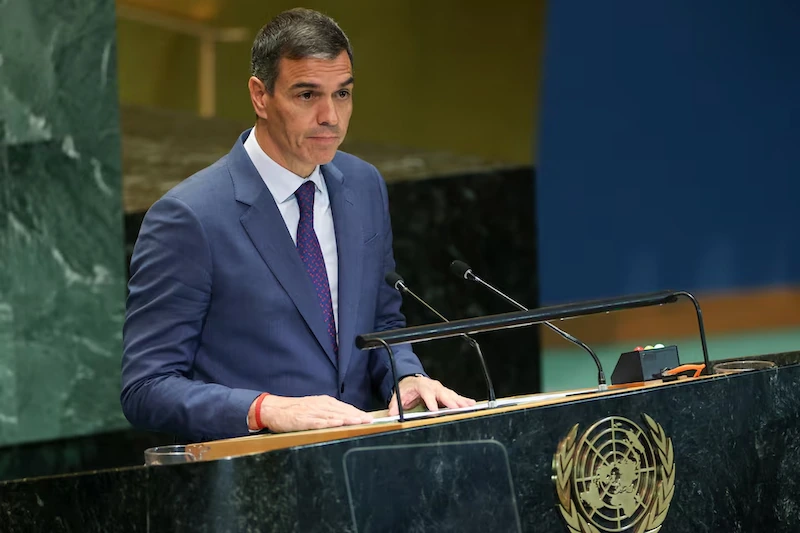


In a bold move contrasting with the trend of tightening borders across Europe, Prime Minister Pedro Sanchez of Spain has unveiled measures to facilitate immigrant integration, emphasizing the economic benefits of migration. While countries like Germany, Slovakia, and Hungary implement stricter controls, Spain remains committed to embracing migrants for the prosperity of its economy and the sustainability of its welfare state.
Sanchez highlighted the importance of managing immigration effectively, emphasizing its role in driving economic growth. Spain's robust economy has thrived, in part, due to skilled immigrants from Latin America filling labor shortages in various sectors. The Prime Minister emphasized that even low-skilled migrants contribute significantly, especially in sectors like construction, agriculture, and hospitality that rely on their labor.
While anti-immigrant sentiments are on the rise in Spain, with a considerable portion of the population perceiving an excess of immigrants, Sanchez remained resolute in advocating for a more inclusive approach. As far-right parties voice concerns about violent crime and strain on social services, Sanchez emphasized the necessity of collaborative efforts to address the challenges.
Sanchez's proposed initiatives aim to streamline the immigration process, including recognizing academic qualifications, enhancing labor migration programs, and simplifying residency applications. Furthermore, Spain plans to advocate for an earlier implementation of a migration pact in the EU, which would facilitate the fair distribution of migrants among member states.
Despite political differences, Sanchez called for unity in addressing the migration crisis, particularly in the Canary Islands where a significant influx of migrants arrives by sea. He rejected extreme measures like increasing naval monitoring and underscored the importance of cooperation in managing the situation effectively.
In response, opposition leaders criticized Sanchez for his government's handling of the migration crisis, calling for a more robust approach. Amidst these debates, the discourse on immigration in Spain reflects broader tensions within the EU regarding migration policies and the balance between humanitarian concerns and economic realities. As Spain navigates these challenges, its stance on immigration stands apart as a beacon of inclusivity amidst a changing European landscape.