


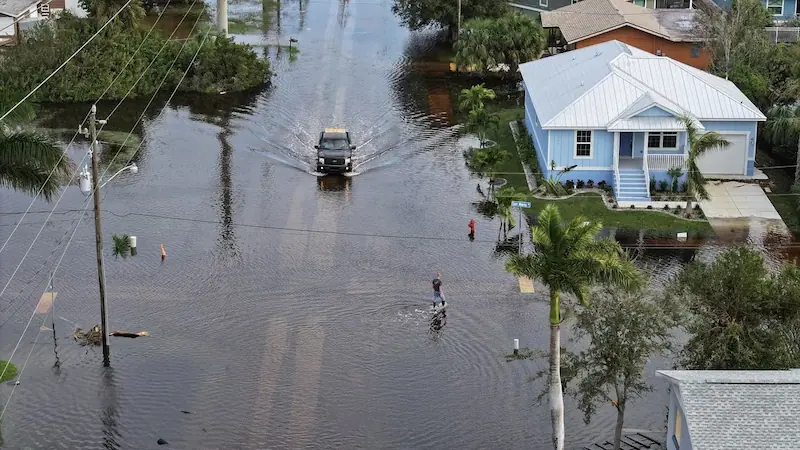


After Hurricane Milton's wrath, the communities in Florida are left grappling with the aftermath of flooded streets and contaminated waters. While the immediate threats of drowning have passed, the stagnant floodwaters present a silent but significant danger to public health.
Experts warn that the seemingly clear water hides a toxic mix of raw sewage, bacteria, viruses, and parasites, posing a range of health risks from gastrointestinal issues to skin diseases. Past hurricanes have shown a spike in emergency room visits due to waterborne illnesses, highlighting the seriousness of the situation.
The recent record rainfall and storm surge during Hurricane Milton overwhelmed wastewater facilities, leading to hazardous sewage overflows. Reports of spills and leaks from treatment plants across the affected areas underscore the threat of bacterial contamination in the floodwaters.
Health officials are particularly concerned about Vibrio infections, a potentially life-threatening illness related to exposure to saltwater. The risks extend beyond diseases, as hidden debris and mold in waterlogged homes can cause injuries, respiratory problems, and exacerbate existing health conditions.
Even as the floodwaters recede, the danger lingers on. Mosquitoes breed in standing water, increasing the risk of diseases like dengue, while mold in homes poses a persistent threat to respiratory health. The long-term impact of Hurricane Milton's floodwaters on public health remains a pressing concern for authorities and affected communities in Florida.