


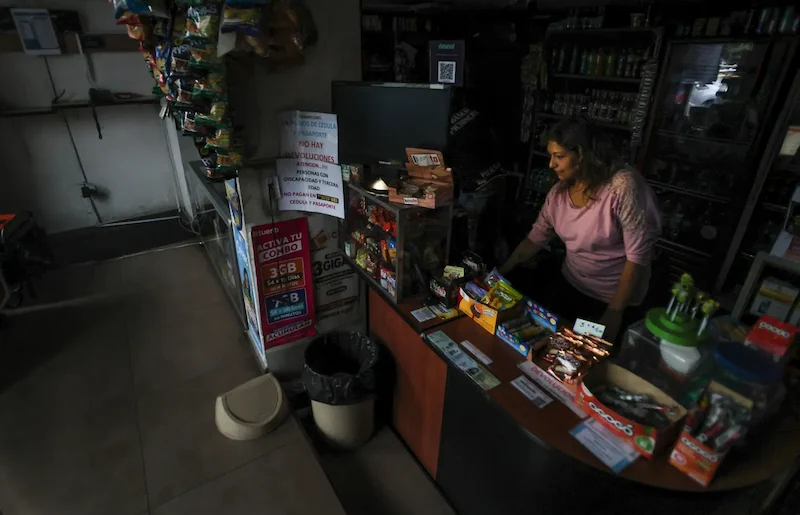


Ecuador finds itself at a critical juncture as its people endure life without consistent electricity, straining an already fragile economy and posing challenges for the country's political future.
Daily 10-hour blackouts have become a harsh reality, and the situation may worsen as a dry spell exacerbates the country's reliance on hydropower. With traffic lights frequently out, internet services disrupted, and residents urged to limit electricity use while backup generators run, the strain on daily life is palpable.
The economic repercussions are undeniable, with the central bank's growth forecast of 0.9% for the year appearing increasingly unattainable. President Daniel Noboa, facing the pressure of potential reelection in February, is tasked with navigating a crisis largely rooted in past decisions that hampered Ecuador's energy infrastructure.
Despite abundant energy resources, Ecuador suffers from underinvestment and past policy missteps, such as centralizing electricity under government control and overreliance on hydroelectric power. Noboa, acknowledging the need for change, has appointed a new energy minister to diversify the country's energy sources and increase private investment in the sector.
However, achieving real progress will not be immediate. Noboa's presidency, marked by internal security challenges and now the energy crisis, is characterized by urgent responses to longstanding issues. The recent attacks on a central bank convoy underscore the pervasive security concerns.
The impact of blackouts and drought is felt across industries, from dairy farming to appliance manufacturing, with ripple effects on production and consumer behavior. Ecuadorians are facing disruptions in daily life and economic activity as the government scrambles for short-term solutions, including hiring emergency power generation from a Turkish barge.
The road ahead requires significant investment in infrastructure, but with existing financial constraints and a recent IMF deal, the path to long-term energy stability appears challenging. Noboa's ability to rally voter support amidst the crisis remains uncertain, though his previous initiatives have garnered approval.
As Ecuador grapples with its electricity crisis, the coming months will be a test of its political fortitude, economic resilience, and the leadership's capacity to steer the country towards a sustainable energy future.