


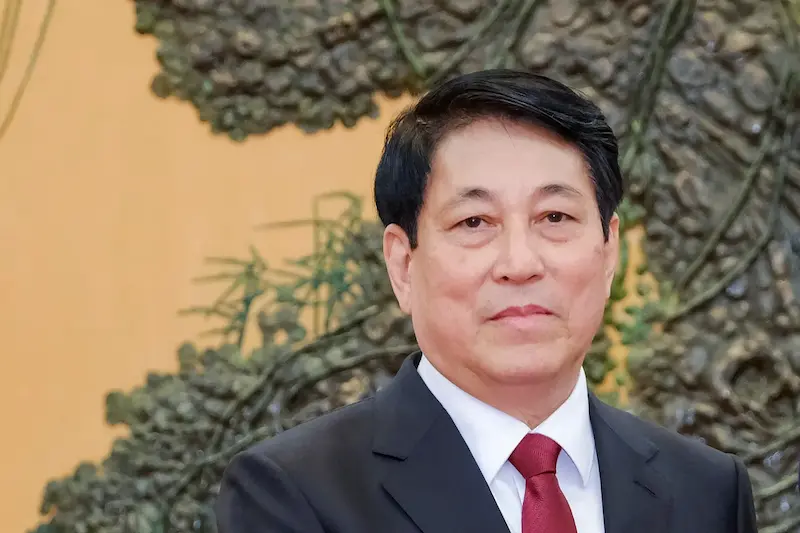


In a significant move to reinforce collective power sharing within the government, Vietnam’s parliament has appointed Politburo member Luong Cuong as the new president, succeeding former Communist Party chief To Lam who recently stepped down from the position.
Expressing his gratitude and acknowledgment of the immense responsibilities ahead, Cuong, a distinguished figure in the Communist Party Secretariat and a former director of the political department in the People’s Army, humbly accepted his new role. With a focus on enhancing national defense and security while staying committed to upholding Vietnam’s foreign policy, Cuong pledged to serve the party, state, and people diligently.
This decision marks a return to Vietnam’s traditional "four pillars" structure, where distinct leaders occupy key government positions, streamlining the country's governance framework. As a trusted confidant of former party chief Nguyen Phu Trong, Cuong’s appointment reflects his loyalty and dedication to the party's principles.
The transition from Lam to Cuong as president aligns with the nation's political trajectory characterized by continuity and stability. Lam, a seasoned public security minister who assumed the presidency following Trong’s passing earlier this year, now focuses on his role as party chief until the end of Trong’s term in 2026.
As Vietnam gears up for the upcoming Party Congress in 2026, the political landscape remains dynamic with potential candidates such as Cuong, Lam, and Prime Minister Pham Minh Chinh vying for the pivotal position of party chief. This selection process, driven by Party Central Committee delegates, will determine the future direction of Vietnam's governance and leadership structure beyond 2026.
The path to political prominence post-Party Congress is not guaranteed, emphasizing the need for support and consensus-building among key figures like Lam. His pivotal role in overseeing the anti-corruption campaign underscores the importance of addressing domestic issues and fostering unity within the party ranks to ensure a cohesive leadership transition in the years to come.