


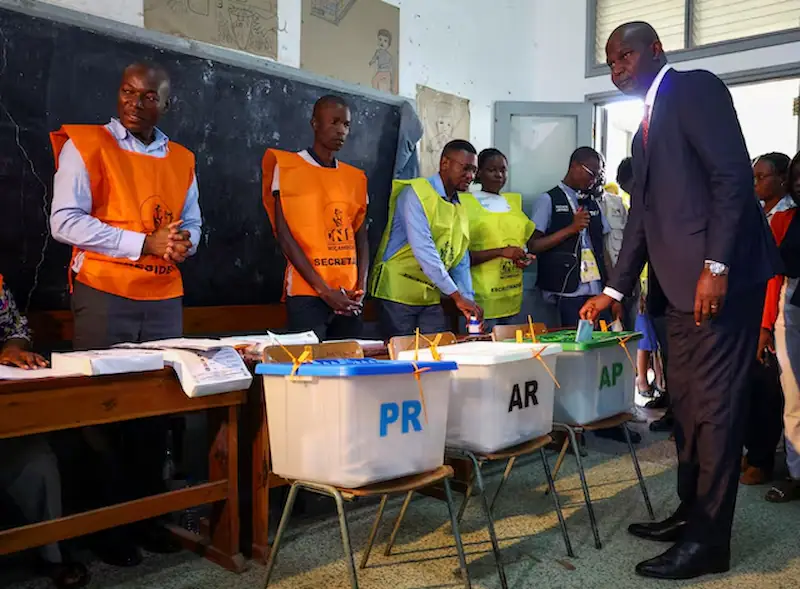


In a hotly contested national election, Mozambique's long-standing ruling party, Frelimo, has clinched a victory, allowing them to extend their reign over the Southern African nation despite accusations of electoral fraud from the opposition.
Daniel Chapo, Frelimo's candidate, is set to take the helm as the country's fifth president following Filipe Nyusi's two-term maximum presidency. Chapo secured over 70% of the votes, as confirmed by the electoral commission, marking a significant win. Meanwhile, Venancio Mondlane, supported by the Podemos party, emerged as the second-place candidate, surpassing the former main opposition party, Renamo.
The parliamentary landscape also saw Frelimo strengthening its position by securing 195 out of the 250 seats, further solidifying their hold on power. However, international observers have raised concerns about the fairness of the October 9 election, citing irregularities in the vote-counting process and result manipulation at the local level, a recurring issue in Mozambique's electoral history.
As accusations of vote-rigging loom, the electoral commission has remained silent, and Frelimo officials have not responded to requests for comments. In the aftermath of Chapo's victory announcement, the country witnessed heightened tensions, with Mondlane challenging the results and calling for nationwide protests. The protests have already begun in the capital city of Maputo, with clashes between opposition supporters and law enforcement escalating.
Against this backdrop of political unrest, Chapo, a lawyer with close ties to the business community, is anticipated to continue the current trajectory, maintaining stability and pursuing existing partnerships with multinational corporations like Exxon Mobil and TotalEnergies. Despite facing daunting challenges such as a mounting debt crisis and environmental disasters, Chapo's administration aims to navigate through these issues while also addressing the ongoing insurgency in the north of the country.
The future of Mozambique hangs in the balance as the country grapples with socio-political divisions and economic uncertainties, fueling concerns both domestically and internationally about the path ahead under Frelimo's continued governance.