


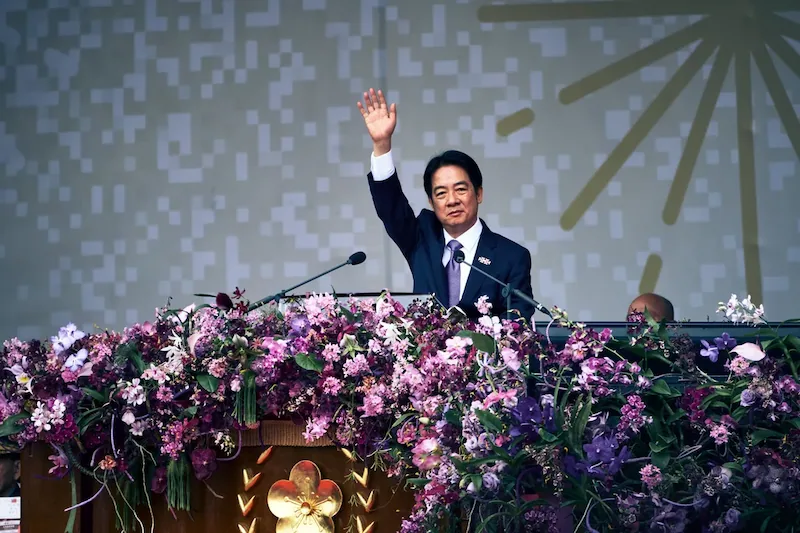


In a landmark decision, Taiwan's Constitutional Court has ruled that recent legal amendments expanding the powers of legislators are unconstitutional. This ruling is expected to streamline governance for President Lai Ching-te, especially amid escalating tensions between China and the United States over the island nation.
The court's ruling emphasized that the legislative branch does not have the authority to compel the president to deliver a State of the Nation address or undergo questioning from lawmakers. Furthermore, the court established limitations on the information that the Legislature can request from both officials and private individuals.
The implications of this decision are significant, as it means that Lai's government will be shielded from potential probes initiated by the opposition-controlled Legislature. This safeguard is crucial for ensuring the smooth functioning of the administration and could prevent interference with Taiwan's efforts to bolster its defense capabilities.
The legal amendments, if upheld, would have enabled the imposition of fines and criminal penalties on individuals who refused to cooperate with legislative inquiries, marking a significant departure from established norms.
Following Lai's inauguration in May, supporters of the Democratic Progressive Party organized large-scale protests against the proposed changes, viewing them as a threat to constitutional integrity and governmental stability. The DPP successfully challenged the amendments in the Constitutional Court, with the opposition Kuomintang advocating for the reforms as necessary improvements.
While the DPP maintained the presidential seat in the recent elections, it lost its majority in the legislature, leading to increased challenges from the KMT and its allies. This power struggle has been playing out against the backdrop of heightened tensions with China, which recently conducted military exercises simulating a blockade of Taiwan and revoked tariffs on Taiwanese agricultural exports as a form of economic coercion.
The Constitutional Court's ruling marks a crucial victory for President Lai and his administration, affirming the separation of powers and safeguarding the government's autonomy from legislative overreach. As Taiwan continues to navigate a complex geopolitical landscape, this decision is likely to shape the dynamics between the executive and legislative branches, setting a precedent for future governance in the archipelago.