


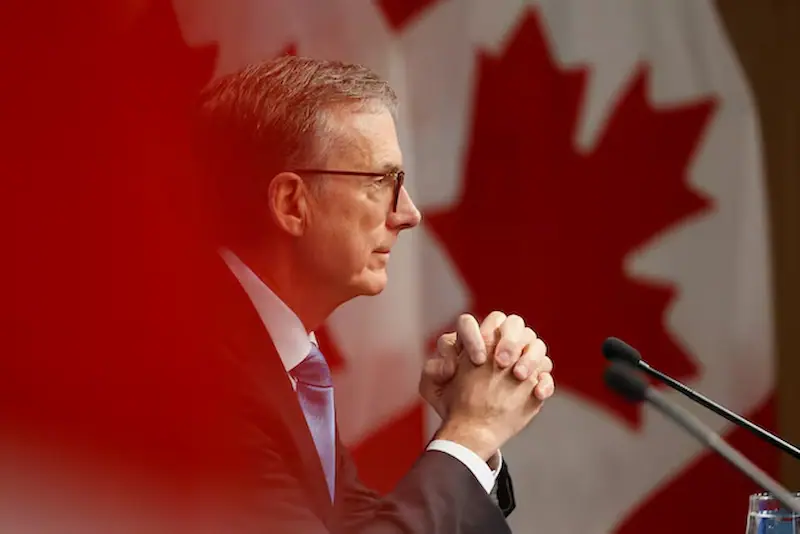


In a recent press conference, Bank of Canada Governor Tiff Macklem highlighted the potential repercussions of Canada's announced immigration reduction targets on the central bank's growth projections. Macklem acknowledged that while the specific numbers had not been thoroughly analyzed yet, the proposed cutbacks to immigration could undoubtedly influence the bank's forecasts for economic growth.
Prime Minister Justin Trudeau's decision to decrease the number of immigrants entering the country has sparked concerns over its potential impact on population growth and, consequently, on various economic indicators. The surge in immigration amidst the ongoing pandemic has played a significant role in driving up demand for housing, leading to price escalations and heightened rental costs.
Macklem emphasized the uncertainty surrounding the pace at which the immigration curbs would be enforced and highlighted that the timing of these changes would significantly shape the adjustments in growth estimates. He mentioned that a quicker decline in population growth than initially assumed could result in lower GDP growth rates in the future.
Moreover, Macklem pointed out that if household spending rebounds swiftly due to sustained interest rate reductions, the economic growth outlook could see a more positive trajectory. The Bank of Canada's recent monetary policy report forecasted a GDP growth rate of 2.1% for the upcoming year and 2.3% for 2026 after implementing a 50-basis point cut in the key overnight rate.
However, economists remain skeptical about the feasibility of the bank's growth projections, as a substantial portion of the anticipated growth was contingent on increased demand spurred by incoming immigrants. The government's predicted population decrease of 0.2% in 2025 and 2026, as a result of the new immigration measures, is projected to gradually rebound by 2027.
The Bank of Canada is set to revise its economic forecasts in the next monetary policy report scheduled for January. Macklem highlighted that while the immigration adjustments may impact both demand and supply, their effects on consumer prices and inflation forecasts are expected to be moderate.
As the government's immigration policies unfold, the Bank of Canada remains vigilant in assessing the evolving economic landscape and adjusting its forecasts to navigate the potential implications on economic growth and stability.