


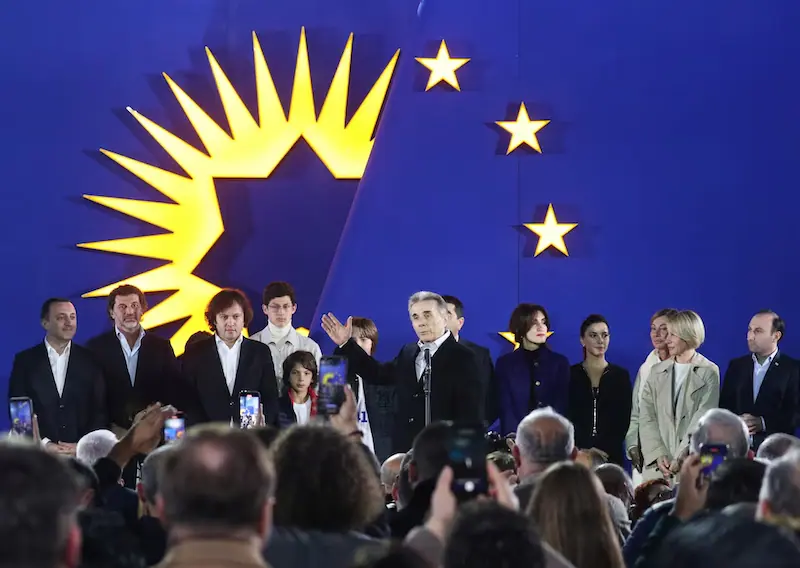


In a tumultuous turn of events, Georgia's recent parliamentary election results have ignited a fierce debate over the country's future trajectory. Early official figures point to a victory for the ruling Georgian Dream party, led by the influential Bidzina Ivanishvili, a billionaire with a complex relationship with the West and Russia. However, the opposition parties have contested these results, claiming to have secured a majority collectively.
The election was framed as a critical juncture for Georgia, where the choice between closer ties with the West or a return to Russian influence loomed large, especially in the wake of the Ukraine conflict. As exit polls painted conflicting pictures of the outcome, tensions rose between the ruling party and the opposition alliances.
Bidzina Ivanishvili, exuding confidence, proclaimed success, applauding the Georgian people for their support. In contrast, opposition leaders insisted that the public had decisively favored a European future, pointing to perceived irregularities and violations during the electoral process.
This electoral saga highlighted deep divisions within Georgian society, with concerns about democracy, corruption, and geopolitical alignments coming to the fore. While international observers raised alarms about potential misconduct, local monitors reported instances of malpractice and violence in various polling stations.
The aftermath of the election remains uncertain, with both the ruling party and the opposition laying claim to victory. The implications of this political deadlock could steer Georgia towards a new direction, either reaffirming its pro-Western stance or veering towards a more ambiguous relationship with Russia.
As Georgia grapples with these seismic shifts, the aspirations of its citizens for progress, transparency, and stability hang in the balance. Whether this election will mark a turning point towards a more inclusive and accountable governance system, or deepen existing divisions, remains a question that only time can answer.