


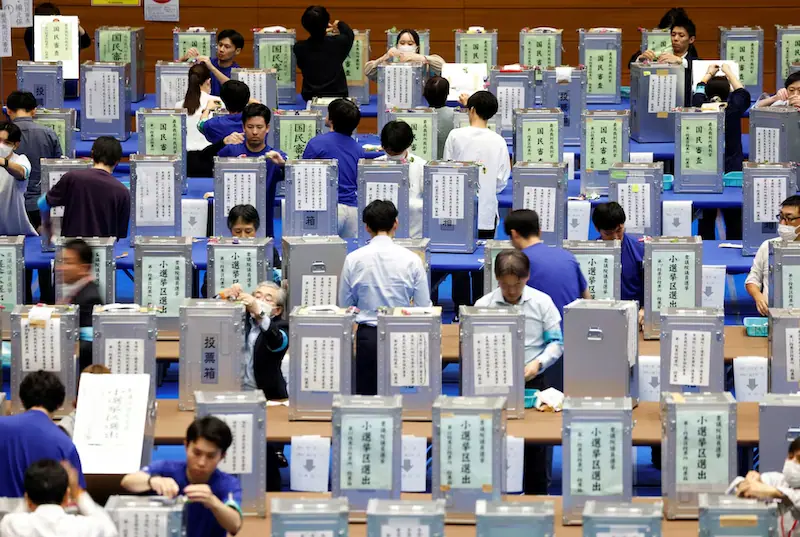


In a stunning turn of events, Japan's ruling coalition suffered a significant blow in Sunday's national election, falling short of a parliamentary majority and casting doubt on the country's political landscape. With Prime Minister Shigeru Ishiba's Liberal Democratic Party (LDP) and partner Komeito securing only 209 seats in the lower house of parliament, down from their previous 279, the coalition faced its worst election outcome in years. The defeat was largely attributed to public dissatisfaction over a funding scandal and economic issues.
On the other hand, the main opposition Constitutional Democratic Party of Japan (CDPJ) emerged as the big winner with 143 seats, compared to their previous 98. The CDPJ, led by Yoshihiko Noda, expressed intentions to collaborate with other opposition parties to seek a change in government. This newfound political landscape could potentially lead to power-sharing arrangements, introducing a level of uncertainty and instability to Japan's governance.
As the results unfolded, Japanese stocks and the yen were anticipated to experience declines, while government bond yields may rise amidst investor apprehension. The election outcome has triggered concerns over the administration's continuity and could impact policy decisions, particularly those concerning the economy and the Bank of Japan's monetary strategies.
With potential coalition partners like the Democratic Party for the People (DPP) and the Japan Innovation Party in the mix, the formation of the next government could necessitate intricate negotiations. Each party presents distinct policy stances that may collide with the LDP's agenda, further complicating the process of establishing a stable ruling arrangement.
The future implications of this election outcome are far-reaching, affecting not only Japan's domestic policies but its international relations as well. Against the backdrop of economic challenges and heightened security concerns in East Asia, the need for a cohesive and effective government becomes even more pressing. As Japan navigates this period of transition, the decisions made in the coming days will shape the country's trajectory in the months and years ahead.