


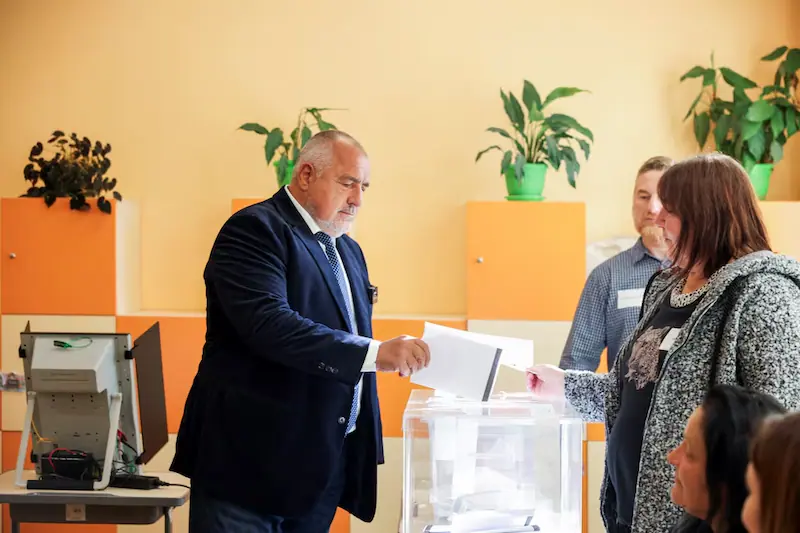


Bulgarians went to the polls on Sunday for the seventh time in four years, hoping to break a political deadlock that has hindered economic progress in the EU's poorest member state. Multiple short-lived governments have plagued Bulgaria since 2020, when public protests led to the downfall of the ruling coalition. Despite voter skepticism towards politicians and a lack of optimism regarding the formation of a new government post-election, the stakes remain high for the nation's stability and progress.
Opinion polls indicate that no single party is poised to secure a parliamentary majority, setting the stage for potentially difficult coalition negotiations. With polling stations closing at 8 p.m., exit polls will be released promptly, and initial election results are expected around midnight. Increased turnout is anticipated, with the public expressing a desire for security and stability amidst ongoing challenges.
A recent Gallup International Balkans survey shows GERB leading with 26.1% of the vote, closely followed by the reformist PP (We Continue The Change) and the ultra-nationalist Revival party. The pressing need for a functional government is underscored by Bulgaria's reliance on EU funds for infrastructure improvements and eurozone accession, which has faced delays due to economic targets not being met.
The road ahead remains uncertain, with the possibility of prolonged political discord favoring populist, nationalist, and pro-Russian factions. Despite the challenges, leaders like PP's Kiril Petkov urge Bulgarians to exercise their right to vote, emphasizing the country's need to move forward collectively. As Bulgarians await the election results, the outcome could determine the nation's trajectory towards stability, prosperity, and stronger governance.