


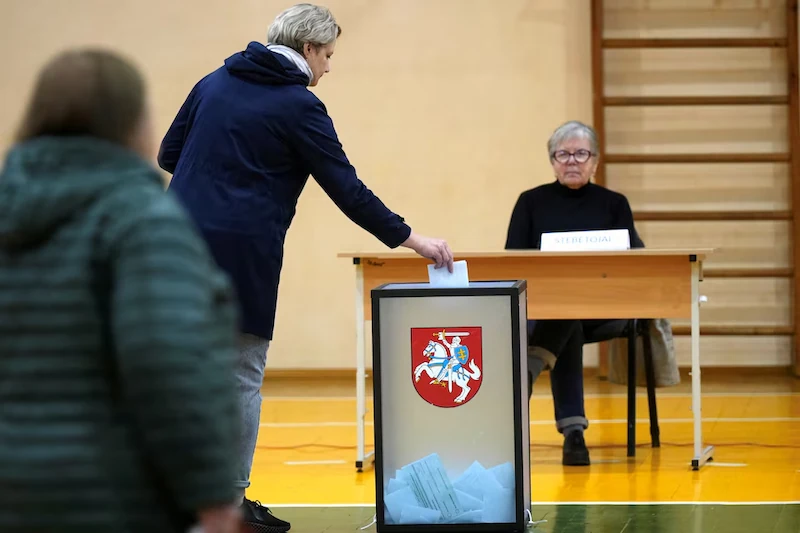


Lithuanians went to the polls on Sunday in a pivotal parliamentary election marked by fears over rising living costs and potential threats from neighboring Russia. The opposition Social Democrats emerged as the front-runners after the initial round of voting, as the country's hybrid electoral system allocated half of the parliament seats based on popular vote and the other half through district-based run-offs.
With a population of 2.9 million, Lithuania's political landscape is shaped by a strong stance against Russia and substantial defense expenditure. The country's defense budget, estimated at around 3% of the GDP by NATO, positions Lithuania as one of the alliance's top military spenders.
As polling stations prepared to close, citizens expressed their hopes for continuity amidst potential political changes. The Social Democrats secured 20% of the vote in the first round, surpassing the ruling Homeland Union and the anti-establishment Nemunas Dawn parties. Meanwhile, Prime Minister Ingrida Simonyte's coalition faced challenges due to issues like high inflation, declining public services, and growing income disparities, prompting calls for reform.
Following the initial results, SD leader Vilija Blinkeviciute initiated talks for a coalition government with two other parties, focusing on economic equality and increased social welfare spending. The election campaign emphasized domestic concerns, with the SD advocating for higher taxes on the wealthy to fund healthcare and social programs.
While economic issues took center stage, national security remained a key priority, given Lithuania's strategic position within NATO and the EU. The country's proximity to Russia and Belarus, both seen as potential security threats, heightened tensions and underscored the importance of stability and peace.
As polling day unfolded, concerns over a possible conflict loomed large in voters' minds. A significant majority believed that Russia could pose a threat to Lithuania in the near future, emphasizing the ongoing regional security challenges.
Overall, the election underscored the complex interplay between economic well-being and national security in Lithuania, highlighting the need for a balanced approach to governance. As the results awaited, the country braced for potential changes that could shape its future trajectory amidst a backdrop of uncertainty and apprehension.