


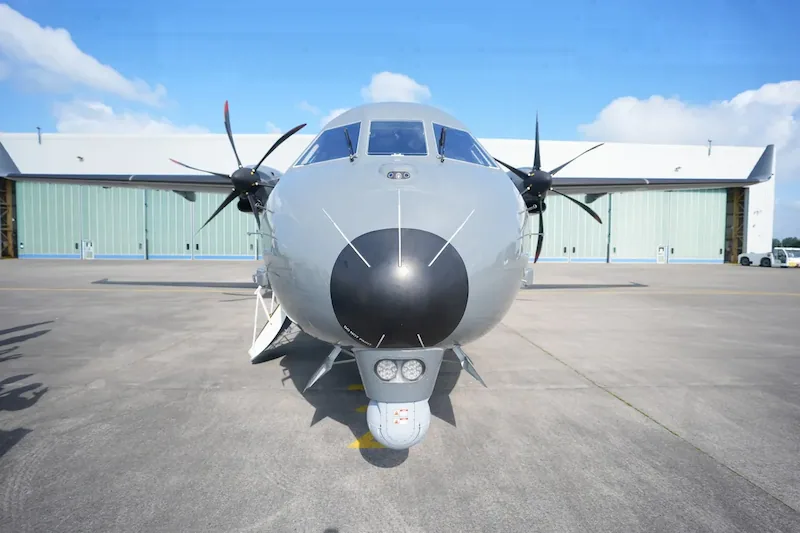


India is on the brink of a significant milestone in its defense production capabilities with the launch of its first private military aircraft manufacturing facility, set to take place on Monday. This groundbreaking initiative, a collaboration between Airbus SE and TATA Advanced Systems, marks a pivotal moment in India's efforts to bolster its domestic defense manufacturing sector and reduce reliance on imports.
The factory, situated in Gujarat and to be inaugurated by Indian Prime Minister Narendra Modi and Spanish Prime Minister Pedro Sanchez, will focus on producing state-of-the-art transport aircraft. This move comes as a part of a strategic plan to replace India's aging military aircraft fleet with more modern and efficient models.
The facility is a part of a larger agreement worth 219 billion rupees, signed between India and Airbus for the production of 56 C-295 transporters. Notably, this partnership will see 16 aircraft manufactured in Spain, with the remaining to be produced in India. This development signifies a significant shift towards enhancing local manufacturing capacities and integrating Indian firms like Bharat Electronics Ltd. and Bharat Dynamics Ltd. into defense production.
The introduction of the C-295 transporters signals a step forward in replacing the outdated Avro cargo planes currently in service with the Indian Air Force. With the capability to carry substantial loads and troop capacities, these aircraft will prove crucial in enhancing India's military logistics capabilities and operational readiness.
Moreover, the decision to increase the local component sourcing in the India-made C-295s to three-fourths emphasizes India's commitment to self-reliance in defense production. This shift aligns with the broader goal of reducing dependency on foreign-made equipment, especially from traditional suppliers like Russia.
The urgency to strengthen indigenous defense manufacturing has been further highlighted by the recent geopolitical events, including Russia's invasion of Ukraine, which have impacted global weapon supplies. This has led to a renewed focus on accelerating local production to ensure the country's defense preparedness remains unaffected by external disruptions.
Overall, the establishment of the Airbus-TATA joint venture facility represents a significant leap for India's defense manufacturing capabilities, showcasing the country's determination to achieve self-sufficiency and enhance its national security infrastructure.