


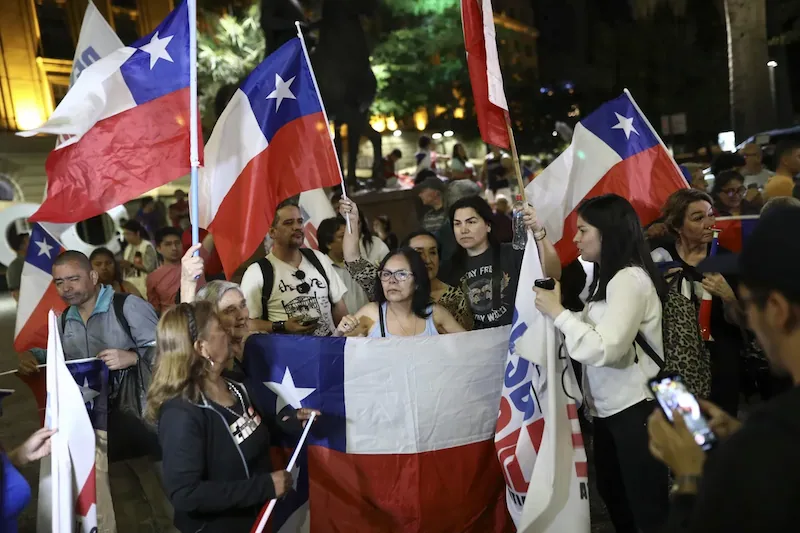


In a significant turn of events in Chile's political sphere, traditional center-right parties emerged victorious in key races during the recent local elections. The Chile Vamos bloc made substantial gains by securing mayoral contests in over 120 municipalities, marking a notable increase from the previous election. This success included important wins in Santiago and Nunoa, as well as the city of Puerto Montt, underscoring their strengthened position in the opposition.
Despite these gains, Chile Vamos faced a setback in losing the mayorship of Puente Alto, a municipality it had long held. This loss hints at the evolving dynamics within the political landscape as the upcoming presidential elections draw near.
Meanwhile, the ultra-conservative Partido Republicano, running on a separate list, fell short of expectations by only clinching eight districts. The party's ambition to dominate the right-wing narrative was thwarted by Chile Vamos, which garnered twice as many votes, signaling a significant shift in the balance of power within the conservative spectrum.
The outcome of the local elections, which saw a turnout due to mandatory voting, provides vital insights for investors and political analysts as they assess the upcoming presidential race. The issues of crime and clandestine migration, pivotal concerns for voters, have played a crucial role in shaping the electorate's preferences.
While the right-wing parties are regaining electoral ground, it is premature to declare a dominant political force in Chile. The presidential contest remains fluid, with no clear frontrunner at this stage.
In financial markets, the election results are expected to have a neutral to slightly positive impact, with the peso appreciating and the stock exchange showing gains. However, the political landscape remains unpredictable, underscoring the need for continued observation as the presidential race unfolds.
President Gabriel Boric's administration celebrated a significant victory with Tomas Vodanovic's landslide triumph in Maipu, positioning him as a potential contender for the presidency. On the left, the ruling coalition retained control of Vina del Mar, maintaining its stronghold in key municipalities.
As the political scene continues to evolve, potential presidential candidates are emerging on both sides. Claudio Orrego and Francisco Orrego are set for a run-off for the governor of Santiago, while figures like Evelyn Matthei and Jose Antonio Kast are emerging as early frontrunners for the presidency.
Emphasizing the nuanced outcome of the local elections, President Boric highlighted that no single entity can claim an overwhelming triumph. The shifting dynamics in Chile's political landscape set the stage for a closely contested and dynamic presidential race in the coming months.