


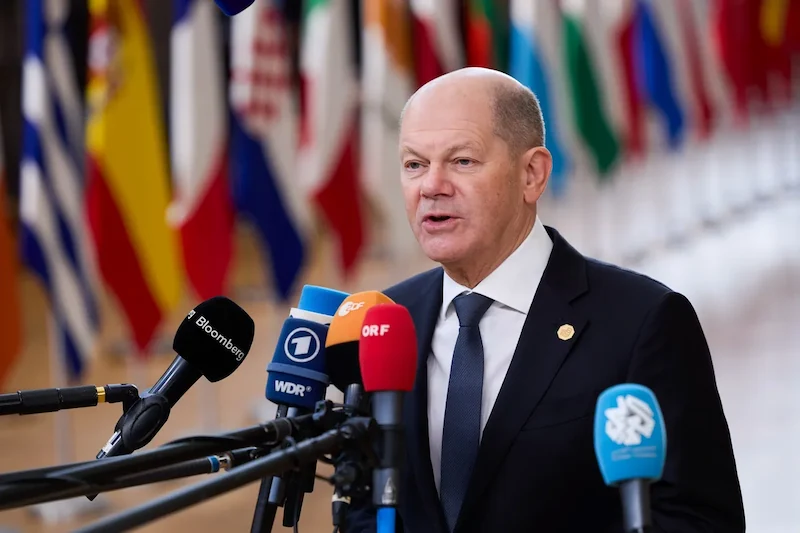


In a bid to navigate the challenges facing Germany, Chancellor Olaf Scholz has called upon his coalition partners to prioritize practical solutions over ideological differences. As the country gears up for the next national election, tensions within the coalition comprising the Social Democrats, the Greens, and the Free Democrats have escalated, raising concerns about its stability.
Acknowledging the complexities of coalition dynamics, Scholz emphasized the government's commitment to fulfilling its responsibilities. The focus of discussions among key officials, including Economy Minister Robert Habeck and Finance Minister Christian Lindner, revolves around implementing measures to stimulate growth, safeguard jobs, and secure approval for the 2025 budget.
Despite recent disarray within the coalition, Habeck, in his role as vice chancellor, acknowledged the need for unity to restore confidence in the government. The conflicting meetings and policy pronouncements have led to a perception of chaos, but there remains optimism that consensus can be reached on key issues.
Economist Greg Fuzesi highlighted the challenges any government would face, irrespective of the election timing, in forming a viable ruling alliance. With a potential risk of policy paralysis looming, the urgency for collaborative decision-making to address Germany's pressing needs becomes imperative.
Amidst a backdrop of discord, Chancellor Scholz's call for cooperation underscores the necessity for pragmatic, solution-oriented governance to steer Germany through turbulent times and uphold its position as a stable economic powerhouse in Europe.