


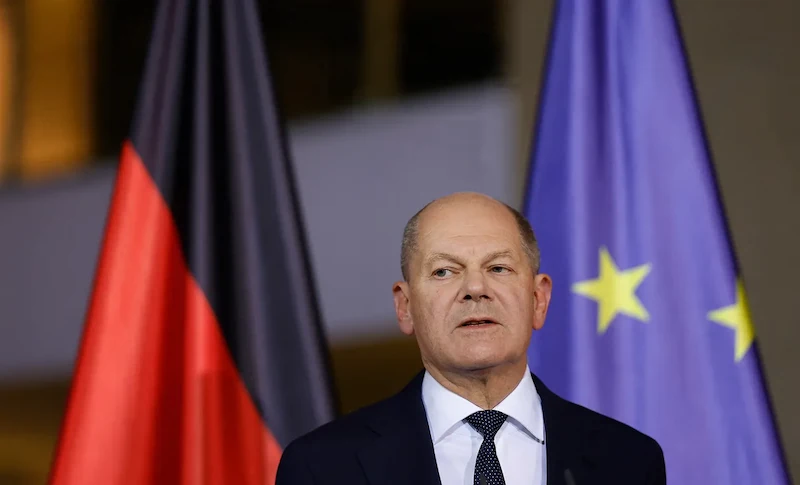


In a dramatic turn of events, German Chancellor Olaf Scholz has taken the bold step of calling for a confidence vote and pushing for a snap election by the end of March. This decision was prompted by the dismissal of Finance Minister Christian Lindner, a move that has left the ruling three-party coalition in disarray.
Scholz's announcement on Thursday evening cited Lindner's obstructionism and betrayal of trust as reasons for his removal. The Chancellor accused Lindner of prioritizing his party's interests over the country's needs, describing his actions as self-serving and detrimental to the coalition's unity.
The discord within the coalition had been brewing for some time, with disagreements over the 2025 budget and the approach to addressing economic challenges plaguing Germany. Scholz emphasized the urgency of the situation, pointing to ongoing conflicts in Europe, tensions in the Middle East, and economic stagnation as pressing issues requiring immediate attention.
The rift between the parties deepened over fiscal policy, with Lindner's insistence on strict borrowing limits clashing with the SPD and Greens' advocacy for increased debt to fund critical initiatives like climate action and defense reinforcement. This ideological divide further strained the already fragile coalition, ultimately leading to its collapse.
As the country braces for a snap election, the conservative CDU/CSU alliance, led by Friedrich Merz, emerges as the frontrunner in opinion polls. With public support exceeding 30%, the alliance stands poised to regain power from Scholz's SPD, which assumed office three years ago.
The upcoming election is set to be a pivotal moment for German politics, with the political landscape facing significant shifts. While the FDP's plummeting popularity raises doubts about its parliamentary future, the resurgence of the CDU/CSU underscores the electorate's shifting preferences.
As Germany prepares for a new chapter in its political journey, the outcome of the upcoming election remains uncertain, with the stakes higher than ever. The nation stands at a crossroads, seeking leadership that can navigate the challenges ahead and steer the country towards a path of stability and progress.