


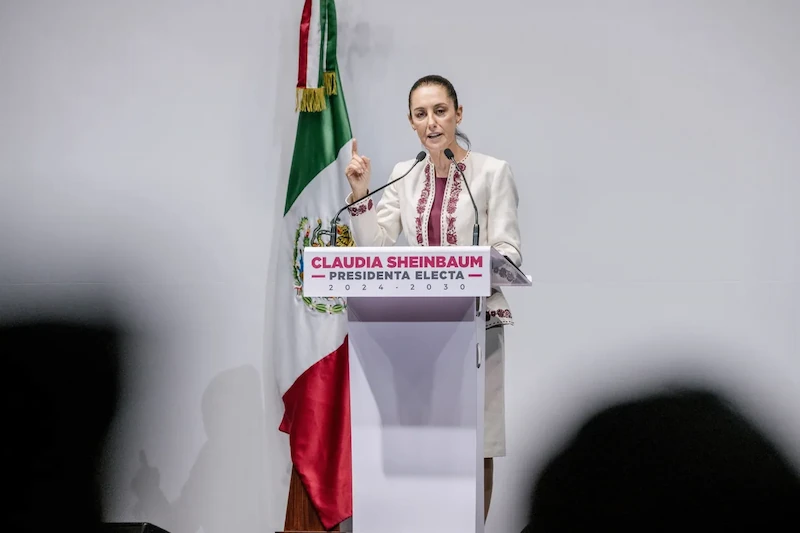


In a bold move to revitalize Mexico's energy sector, President Claudia Sheinbaum has presented an ambitious vision aimed at increasing funding for power generation and transmission projects while streamlining regulations to attract private investors. The comprehensive plan, outlined during a recent press conference, outlines a substantial investment of $23.4 billion in energy infrastructure projects through 2030.
Under Sheinbaum's leadership, Mexico plans to allocate $12.3 billion towards electricity generation and an additional $11.1 billion to enhance transmission and distribution networks. Moreover, the government aims to reduce bureaucratic hurdles and costs for private companies looking to invest in the country's energy sector, signaling a more welcoming environment for potential investors.
A key aspect of the proposal is the retention of a rule allowing private entities to own up to 46% of Mexico's renewable energy generation capacity, paving the way for the development of up to 9.6 gigawatts of capacity by 2030. This move is expected to spur an estimated $9 billion in private investment, further propelling Mexico's energy transition towards renewables.
Sheinbaum's energy plan comes at a critical juncture as Mexico grapples with issues such as power outages and deteriorating infrastructure. The government is also focused on rejuvenating the state-owned oil company, Pemex, which faces challenges in production and a significant debt burden of nearly $100 billion.
By prioritizing the strengthening of public energy companies and enhancing their planning capabilities, President Sheinbaum aims to bolster Mexico's energy landscape. She emphasized the importance of recovering the efficiency of companies like Comision Federal de Electricidad and enhancing their performance.
Moving forward, Mexico will continue to refine regulations governing private investors through the enactment of secondary laws. While some skepticism persists regarding the feasibility of Mexico's renewable energy targets, the government remains steadfast in its commitment to transition to 45% renewable energy by 2030.
With recent legislation reclassifying state energy entities as public entities, questions linger about the extent of private sector involvement in partnerships with Pemex and CFE. Investors are closely monitoring the evolving landscape in Mexico, with some expressing cautious optimism about the potential for international investment.
As Mexico positions itself as an attractive destination for energy investment, the success of public-private partnerships and their alignment with investor expectations will be pivotal in shaping Mexico's energy sector in the coming years. The next 18 to 24 months will be crucial in determining the trajectory of energy investment in Mexico and its alignment with global sustainability goals.