


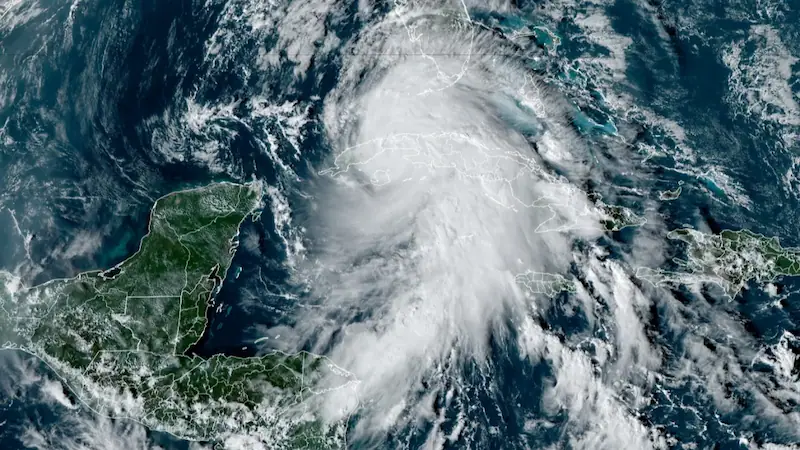


In a remarkable display of strength and speed, Hurricane Rafael surged into Cuba as a fierce Category 3 hurricane on Wednesday, marking the fifth major hurricane to hit the Atlantic this year. With winds intensifying by a staggering 55 mph in just 24 hours, Rafael stands as the strongest hurricane to strike this late in the year since 2020, showcasing the alarming trend of rapid intensification sweeping the Atlantic basin. Scientists attribute this phenomenon to the escalating warmth of the atmosphere and oceans due to the continued emission of fossil fuels.
Although wreaking havoc in the Caribbean, Rafael's trajectory beyond Cuba presents a puzzling conundrum. Expected to confront challenging conditions in the Gulf of Mexico, the hurricane's path could lead to a weakened impact on the US Gulf Coast or northeastern Mexico this weekend.
The dire consequences for Cuba are evident as Rafael lashes the country with relentless heavy rain, potential storm surges up to 13 feet along the southern shore, and destructive hurricane-force winds, marking the first Category 3 hurricane to hit since Ian in 2022. With the recent memories of Hurricane Oscar's onslaught in late October still fresh in Cuban minds, the vulnerable nation faces yet another formidable test of resilience.
As Rafael emerges as the most powerful hurricane in the northwestern Caribbean in November since 2009, its future track remains shrouded in uncertainty. While initial forecasts hinted at a trajectory toward the northern Gulf Coast, recent model analyses point to a significant westward shift, possibly impacting regions from Texas to northeastern Mexico. Shell and BP have taken precautions by evacuating non-essential personnel from offshore drilling platforms, bracing for potential impacts.
Despite the looming uncertainty, one consistent factor is the potential for torrential rainfall in the Southeast, posing risks of flash flooding in already waterlogged areas. As Rafael navigates the Gulf waters towards the weekend, the storm's intensity is expected to diminish, providing a sliver of relief for the US coastline. Nevertheless, the widespread tropical moisture fueling Rafael may fuel significant rainfall for the Southeast, warranting vigilance for potential flooding risks.
In the face of Hurricane Rafael's unpredictable path and lingering aftermath, the residents of the Gulf Coast and beyond remain on alert, ready to face whatever challenges this formidable storm may bring.