


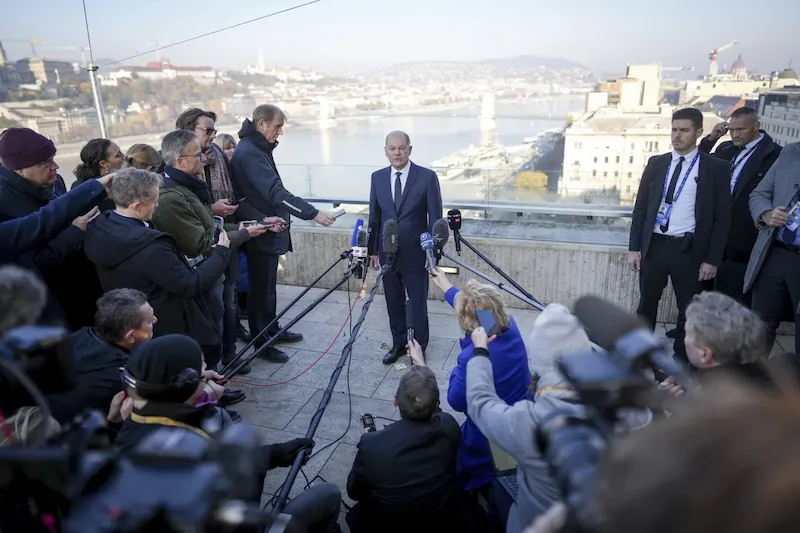


Amidst political upheaval in Germany, Chancellor Olaf Scholz has indicated his willingness to negotiate the timing of an early election. Following the dissolution of his coalition with the Greens and Free Democrats, Scholz, a Social Democrat, faces the challenge of regaining political stability and must navigate the demands for a new national ballot.
While initially proposing a confidence vote on January 15 as the first step towards a March election, Scholz now appears open to discussions with opposition lawmakers. The Chancellor emphasized the importance of reaching agreements on key legislation before his term ends, hinting at possible compromises on the election timeline.
However, pressure is mounting on Scholz to expedite the election process, with a recent poll showing strong public support for an immediate election. Business groups have also called for a swift resolution to the political uncertainties to address the economic challenges facing Germany.
Opposition leader Friedrich Merz criticized Scholz’s perceived delay tactics, arguing that the country urgently needs stable governance to drive economic growth. The prospect of prolonged political stagnation comes at a time when Germany is confronted with significant economic hurdles that require prompt government action.
As internal party voices join the outcry for a speedy election, the future political landscape remains uncertain. The center-right alliance led by Merz holds a lead in the polls, positioning itself as a strong contender for the chancellery. Meanwhile, support for the Social Democrats and other parties fluctuates, creating a volatile political climate.
With a majority of voters expressing a desire for a January election and welcoming the fall of Scholz’s coalition, the pressure on the Chancellor to navigate these turbulent waters intensifies. The upcoming negotiations and decisions will determine not only the election timeline but also the path forward for Germany’s governance and economy.