


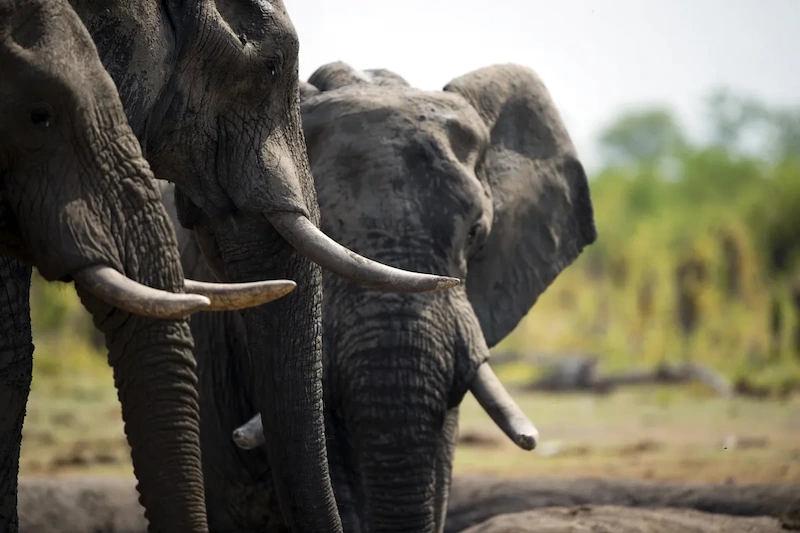


In a groundbreaking initiative, Zimbabwe has announced plans to collar and monitor the movements of dominant female elephants in the vast Hwange National Park. This innovative program, a collaboration between the country's national parks authority and the International Fund for Animal Welfare, aims to address the growing conflict between elephants and rural farmers by gaining crucial insights into the herds' movements.
With approximately 100,000 elephants, Zimbabwe hosts the world's second-largest population of these majestic creatures, after Botswana. Hwange National Park, equivalent in size to the state of Connecticut, is a critical habitat for these elephants. However, the expanding human presence in the surrounding areas has led to increased encounters between elephants and local communities, resulting in crop damage and safety concerns.
By fitting eight dominant female elephants with state-of-the-art satellite-enabled GPS collars, the program seeks to monitor the movements of these herds as they navigate through the human-dominated landscape. By tracking the matriarchs, who lead the herds, researchers hope to gain valuable data on herd behavior and migration patterns, ultimately enabling better management strategies to mitigate human-wildlife conflict.
Recent reports of elephants venturing into nearby villages, prompting an unofficial curfew for residents due to safety concerns, underscore the urgency of finding sustainable solutions. Through this collaborative effort, Zimbabwe is pioneering a proactive approach to coexistence, striving to safeguard both its rich biodiversity and the livelihoods of its people in harmony with nature.