


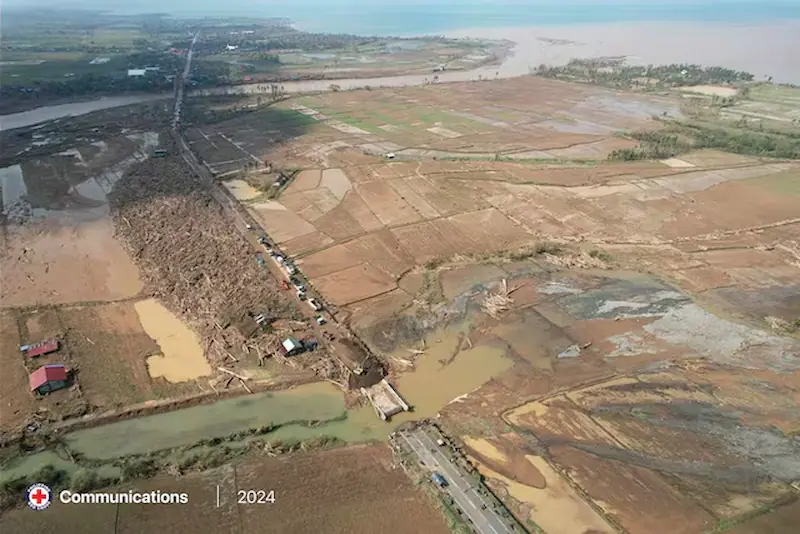


As super typhoon Man-Yi gains strength on its path towards Luzon island in the Philippines, authorities have issued urgent appeals for residents in low-lying and coastal areas to move to safety. With sustained winds reaching 195 kph and gusts up to 240 kph, this marks the sixth tropical cyclone to hit the country in just one month, intensifying the threat it poses to communities.
The state weather agency, PAGASA, has raised its storm alert to the highest level for provinces in the central Bicol region, namely Catanduanes and Camarines Sur. Ariel Nepomuceno, head of the Office of Civil Defense, highlighted the potential dangers of the storm, including heavy rains, powerful winds, floods, and storm surges that could reach up to 3 meters in height.
With the ground already saturated from previous typhoons, the risk of landslides is particularly high. Over 500,000 people in the Bicol region have been evacuated so far, with more expected to follow as local authorities ramp up efforts. PAGASA has warned of a potentially catastrophic and life-threatening situation in the region.
As Man-Yi inches closer to landfall, expected late Saturday night or Sunday morning, preparations are in full swing. The capital region, Metro Manila, is also bracing for heavy rains. Flight cancellations have already been reported in the eastern Visayas region, while the possibility of severe weather outside the immediate landfall zone remains a concern.
The recent onslaught of storms in the western Pacific has raised alarm, with October alone claiming 162 lives in floods and landslides. The coordination of response efforts is crucial, with thousands of personnel and vehicles ready for search, rescue, and relief operations. The goal is clear: to minimize casualties and ensure the safety of all those in the typhoon's path.