


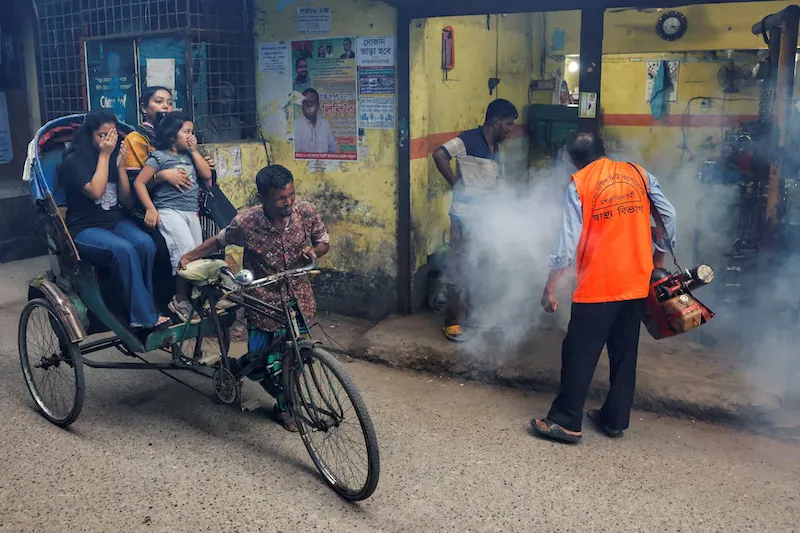


In Bangladesh, a severe outbreak of dengue fever has emerged as temperatures rise, and the monsoon season extends, resulting in over 400 fatalities and overwhelming hospitals across the country. Official data reveals that 78,595 individuals have been hospitalized due to dengue-related complications in 2024, with 4,173 currently under medical care, stressing the healthcare system.
Professor Kabirul Bashar from Jahangirnagar University attributes the escalating outbreak to shifting weather patterns induced by climate change, creating optimal breeding conditions for the Aedes aegypti mosquito, the primary vector of the disease. The unusual monsoon-like rainfall in October has further exacerbated the situation, prolonging the epidemic beyond its typical season from June to September.
The densely populated urban areas in Bangladesh have become hotspots for the rapid transmission of dengue fever, as rising temperatures and longer monsoons drive mosquito breeding. To combat the crisis, Bashar emphasizes the need for year-round vector surveillance to monitor and control the spread of the disease.
Renowned physician Dr. ABM Abdullah underscores the importance of early detection and proper treatment in reducing dengue-related fatalities to less than 1%. However, the strain on the healthcare system caused by the escalating outbreaks, like last year's deadliest recorded period, with 1,705 deaths and over 321,000 infections, has prompted urgent calls for more rigorous preventative measures and improved healthcare infrastructure.
Health authorities recommend precautions such as using mosquito repellents and bed nets to prevent mosquito bites. Meanwhile, experts advocate for stricter measures to eliminate stagnant water sources, where mosquitoes breed, in a collective effort to curb the growing dengue crisis in Bangladesh amid the challenges posed by climate change.