


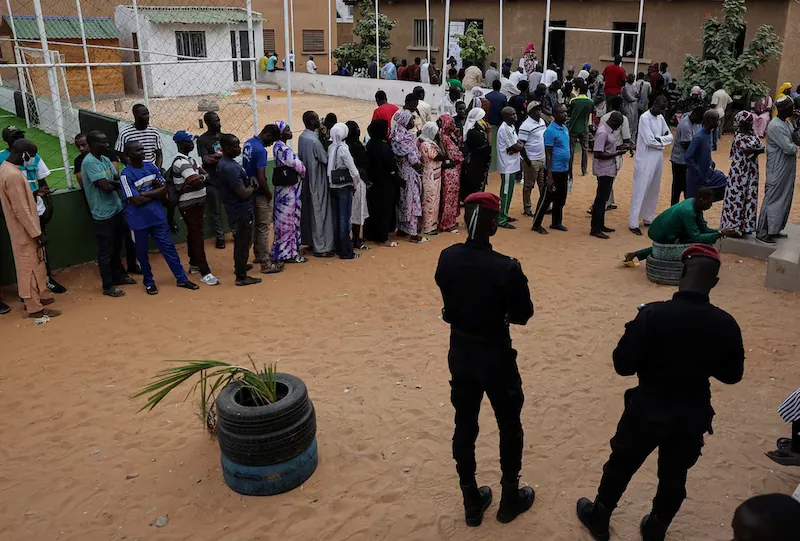


Senegal went to the polls on Sunday in a critical legislative election, with President Bassirou Diomaye Faye seeking a clear majority to advance his reform agenda. The campaign period has been marked by clashes between political rivals, raising concerns about potential unrest. This comes after a tumultuous period before the presidential election in March, which witnessed some of the worst political violence in recent years.
President Faye, casting his vote in Ndiaganiao, urged the electorate to remain calm regardless of the election outcome. With over 7 million registered voters, the electorate will choose candidates for the 165-seat assembly from 41 parties or entities. Faye aims to fulfill promises of fighting corruption and enhancing livelihoods that propelled him to power in April.
Key concerns among Senegalese voters are job creation and economic stability, with inflation straining livelihoods and the youth population facing unemployment challenges. The urgency for change is palpable, as people eagerly await the election results to gauge the path forward.
Faye's initiatives have been hindered by the opposition-led assembly, leading to its dissolution in September to pave the way for the current election. At a polling station in Dakar, voters expressed hope in Faye's party, Pastef, to address pressing issues and deliver on their promises.
The government is also contending with slower economic growth and a deepening budget deficit revealed by a recent audit. A $1.9 billion IMF program has been stalled since the fiscal crisis disclosure, exacerbating the country's financial challenges.
An unexpected alliance between two opposition parties, including the Republic party led by former Prime Minister Macky Sall, poses a significant challenge to Faye's Pastef party. Additionally, clashes between opposition supporters, notably led by Dakar's mayor Barthelemy Dias, have added a layer of tension to the electoral landscape.
As Senegal awaits the election results, the outcome will determine the course of the nation's future, shaping its trajectory on critical issues such as corruption, economic stability, and governance.