


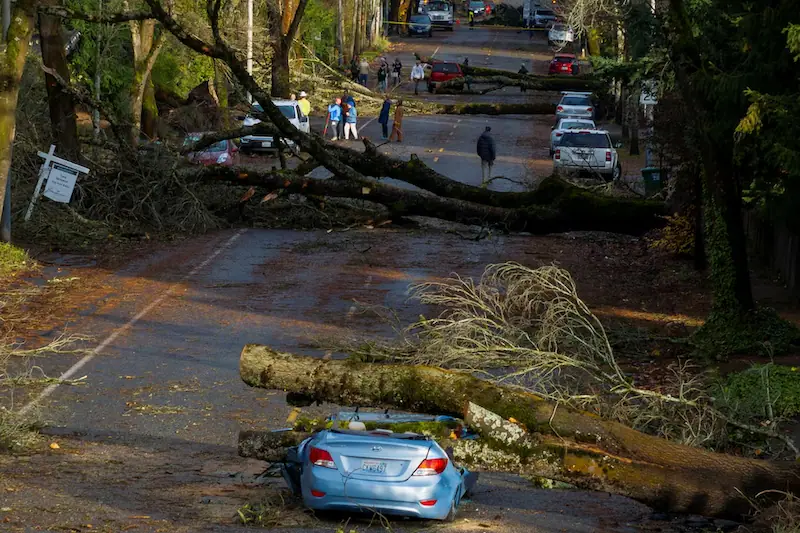


A powerful storm wreaked havoc in Washington state on Wednesday, leaving behind a trail of destruction. With winds as strong as tropical-storm-force levels and gusts reaching up to 70 mph, the storm caused chaos across the region. Tragically, the storm claimed the lives of two individuals and injured two others as trees fell on homes and a trailer in various locations.
The impact of the storm was widespread, with over 530,000 homes and businesses in Washington, southwest Oregon, and Northern California left without power. The aftermath also extended to Canada's British Columbia, where the power system was severely affected, leaving many residents in the dark. The scenes of destruction were evident, with cars crushed by fallen trees and homes damaged in the wake of the storm.
As the storm moved on to California, the focus shifted to the extreme rainfall it was set to bring. Forecasters warned of potentially catastrophic rainfall amounts, with some areas expected to receive up to 20 inches of rain. This phenomenon, known as a "bomb cyclone," occurs when a storm rapidly intensifies in a short period, resulting from the collision of cold and warm air masses.
Authorities issued warnings and watches across the U.S. Pacific Northwest, urging residents to stay indoors and exercise caution due to high winds and flooding risks. Schools in western Washington were forced to cancel classes as the storm's impact lingered. The transportation department advised motorists to be vigilant while navigating roadways littered with downed trees and other hazards.
Despite the challenges posed by the storm, communities came together to support each other during this difficult time. The resilience and unity displayed in the face of adversity highlighted the strength of the region in overcoming natural disasters. As the region braces for the continued effects of the storm, the spirit of solidarity shines through, providing hope for the days ahead.