


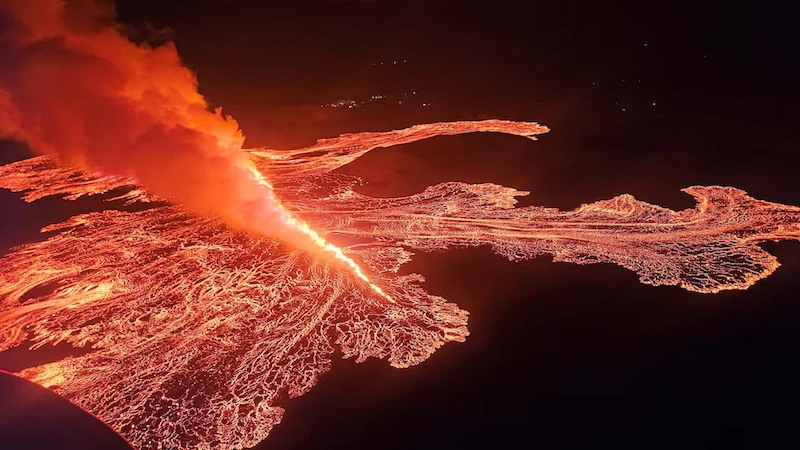


A volcano on Iceland's Reykjanes Peninsula erupted once more late Wednesday night, marking the tenth eruption in the past three years. The eruption, characterized by fountains of lava and billowing smoke, did not disrupt air traffic or infrastructure in the region, according to the country's meteorological office.
Iceland, situated on the boundary between the Eurasian and North American tectonic plates, is a hotbed of seismic activity, boasting geysers, hot springs, and numerous volcanoes. Social media broadcasts captured the spectacular sight of glowing lava in vivid hues of yellow and orange shooting high into the darkened sky.
The eruption was preceded by initial signs just 45 minutes before a massive ground fissure, stretching approximately 3 km (1.9 miles), was formed as magma pushed its way to the surface. While authorities had issued warnings about volcanic activity due to magma buildup beneath the Reykjanes Peninsula, there had been no significant rise in seismic activities leading up to the event, the meteorological office stated.
Despite being considerably smaller than the previous eruption, Wednesday's event sparked attention across the region. Known as fissure eruptions, these occurrences on the Reykjanes Peninsula do not directly impact the capital city, Reykjavik, and do not result in significant ash dispersal into the stratosphere, thus avoiding disruptions to air traffic.
Keflavik Airport, the main gateway to Iceland, reported no flight disruptions, and critical infrastructure remained secure. However, the Blue Lagoon, a renowned geothermal spa resort, closed temporarily and evacuated guests as a precaution. The town of Grindavik, previously evacuated in December, stayed mostly deserted due to the ongoing volcanic threat.
While there was no immediate risk of lava flowing towards Grindavik, approximately 50 houses occupied by returning residents were evacuated as a safety measure, as announced by the civil protection agency.
After lying dormant for 800 years, the geological systems in the Reykjanes area reactivated in 2021 and have since experienced eruptions at an increasing frequency. Experts anticipate that Reykjanes is poised for recurrent volcanic activity for decades, or possibly even centuries, signaling a prolonged period of eruptions and seismic events in the region.