


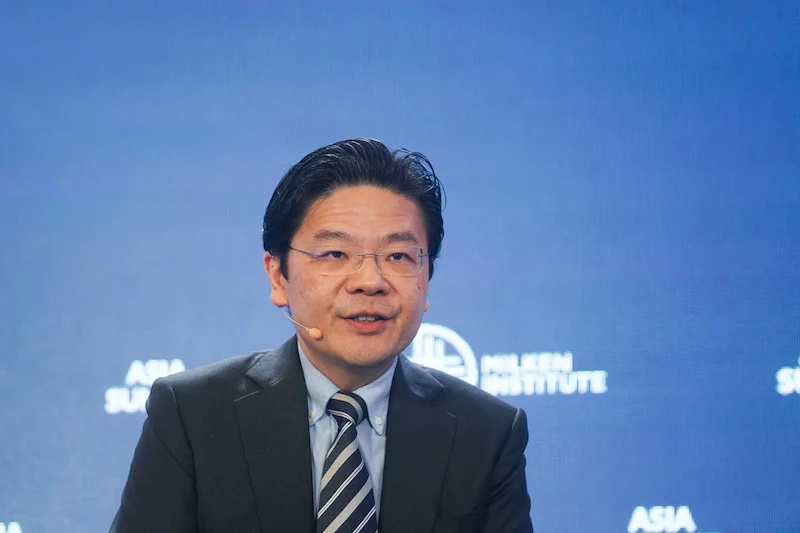


Singapore's ruling People’s Action Party (PAP) is gearing up for the upcoming general election, with Prime Minister Lawrence Wong set to take charge and lead the party into the polls. Following a smooth transition from former premier Lee Hsien Loong, Wong, a Harvard graduate and current finance minister, is poised to strengthen the party's position in the city-state's political landscape.
With elections due by November 2025, Wong faces the task of renewing and reinforcing the party's platform amidst various challenges. The PAP, which has held power since Singapore's independence in 1965, has recently encountered setbacks such as a former minister being jailed and public concerns over rising living costs.
In response, Wong has outlined a strategy focused on enhancing safety nets and re-skilling programs to combat income inequality. Notably, the government has introduced temporary unemployment benefits, marking a departure from previous policies. Wong's budget proposals have also increasingly prioritized support for workers, with measures including cash payouts and tax breaks totaling billions of dollars.
While Singapore's economy is rebounding faster than expected, with a growth forecast of around 3.5% for this year, challenges loom on the horizon. The transition of power in the US and potential trade policy shifts could impact Singapore's trade-dependent economy. Wong emphasized the need to diversify trade partnerships to navigate global uncertainties.
In the wake of the PAP's reduced performance in the 2020 election, Wong acknowledged the persistent presence of the opposition and warned against complacency. Analysts predict that further electoral challenges could lead to policy adjustments by the PAP. The party's response to growing inequality, such as implementing higher taxes on high earners and adjusting expatriate salary thresholds, reflects a willingness to address public concerns.
As Wong prepares to lead the party into the next election, he remains focused on solidifying the PAP's position while navigating evolving global dynamics. With a commitment to addressing domestic challenges and bolstering Singapore's resilience, Wong's leadership will play a pivotal role in shaping the city-state's political and economic trajectory in the coming years.