


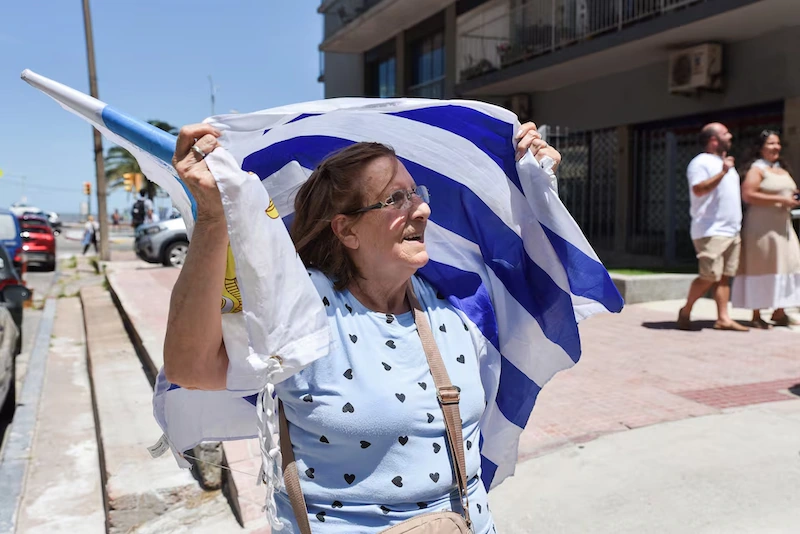


In the tranquil nation of Uruguay, voters are participating in a second-round presidential election with opposing candidates Yamandu Orsi and Alvaro Delgado, embodying a political landscape characterized by moderation rather than sharp divisions. The race is expected to be closely contested, with both candidates standing on platforms that promise stability and progress for the country.
Concerns such as high living costs, inequality, and crime rates are at the forefront of Uruguayan voters' minds, but the easing of inflation and steady economic growth have provided a backdrop of optimism leading up to the election. Unlike the polarized political climates seen in neighboring countries, Uruguay's elections reflect a more nuanced spectrum, with both left and right-wing coalitions vying for power.
Orsi, representing the Broad Front, and Delgado, backed by the National Party and the Colorado Party, have presented themselves as candidates of continuity and progress, respectively. While Orsi pledges a "modern left" approach, Delgado emphasizes the successes of the current government and the need for stability to continue the nation's economic growth.
With President Lacalle Pou unable to seek immediate re-election, the outcome of this runoff will shape Uruguay's future path. While both candidates vie for the support of undecided voters and those who did not turn out in the first round, their strategies have largely focused on consolidating existing support rather than introducing new policies.
As Uruguayans cast their votes, the question of whether the country will defy global trends of incumbent parties losing voteshare remains. With a solid economic foundation and a history of political moderation, Uruguay is poised to choose its next leader in a closely fought and pivotal election that reflects the country's values of stability, progress, and moderation.